
For small-batch brigadeiros that hold their shape, cook sweetened condensed milk, cocoa and butter over low heat until a spatula briefly exposes the bottom of the pan. Then let a small sample cool before deciding whether the batch is ready to roll. The pan trail tells you when to start checking. The cooled sample tells you whether the finished candy will stay round.
Brigadeiros are Brazilian party sweets with a soft chocolate centre and a coating of chocolate sprinkles. You can make a small plate without opening two cans or clearing the kitchen for a long rolling session. This version scales down the cocoa brigadeiro recipe from I Heart Brazil. Cooking time and yield depend on your pan and portion size; use the checks below for your first batch.
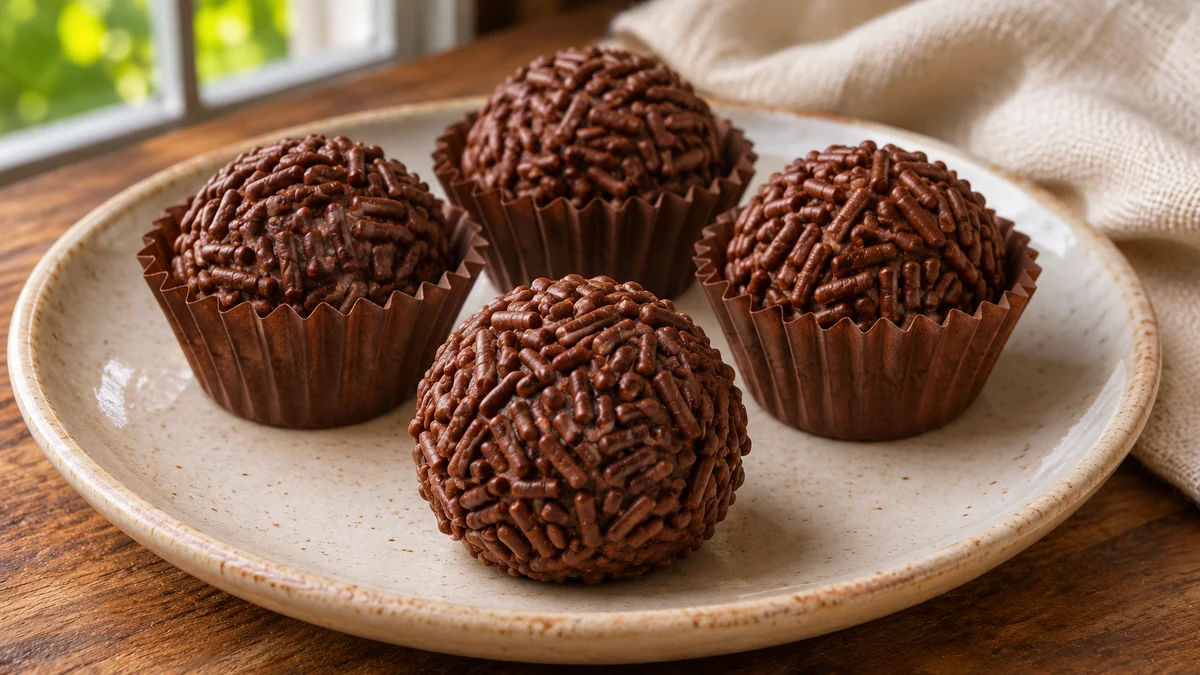
Ingredients for a half-can batch
- 200 g sweetened condensed milk, about half a standard 397 g can. Weigh it if the package size differs.
- 1½ level tablespoons unsweetened cocoa powder, sifted if lumpy.
- ½ tablespoon unsalted butter, about 7 g, plus a thin smear for the cooling plate and your hands.
- Chocolate sprinkles for rolling, poured into a shallow dish as needed.
Get out a small heavy-bottomed saucepan, a flexible spatula, a plain saucer for the texture check, and a separate shallow plate for the cooked mixture. Paper candy cups are handy for serving. A kitchen scale is useful if you want a particular size, but you can start with a teaspoon and adjust each portion by eye.
The pan should give your spatula room to travel across the whole base. A very wide pan leaves a thin layer across the bottom and can make a half batch harder to monitor. In a narrow, deep pan, it is harder to see the trail and scrape around the edges. Choose a pan you can stir comfortably with one hand while the other steadies the handle. Set your plates and sprinkles out before you start.
Choose the condensed milk and cocoa
Look for sweetened condensed milk on the label. Evaporated milk, regular milk and table cream have different proportions of water and solids and do not replace it directly in this formula. If the can is bigger or smaller than 397 g, the scale matters more than the phrase half a can. Use the can instructions for refrigerating any unused milk after opening it.
Use unsweetened cocoa rather than a sweetened hot chocolate mix. The condensed milk already brings sweetness. A drinking mix may add sugar, milk powder or thickeners, so using the same spoonful can change both the flavour and how the mixture cooks. Sift an especially lumpy cocoa into the cold mixture or smooth it into a small amount of the measured condensed milk first.
The sprinkles are part of the flavour. Tasting just one before using the whole bag helps you decide whether you like the coating with the cocoa you chose. Very large decorative pieces may be awkward to press onto a small candy. Use the coating in a shallow dish and top up as you go. Check the dairy and coating labels if you are serving people with food allergies.
Cook gently and look for the pan trail
- Lightly butter the cooling plate. Put the condensed milk and cocoa into the saucepan while it is cool. Stir until there are no obvious dry pockets, then add the butter.
- Set the pan over low heat and stir continuously. Sweep the flat of the spatula across the base and into the points where the sides meet the bottom. The mixture will loosen as it warms before it starts to thicken.
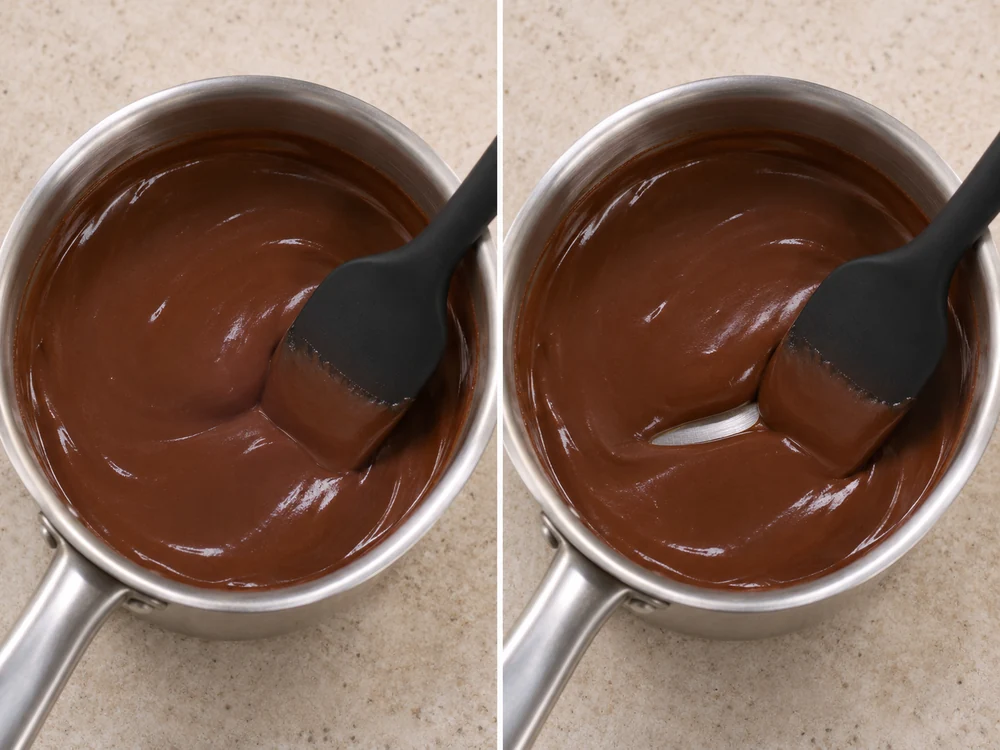
- As the mixture gets thicker, pull the spatula across the centre. If the sides flow straight back together and cover the bottom immediately, keep stirring gently. Once you can see a clear strip briefly and the mixture begins moving as a mass, lift the pan off the burner and check a cooled sample.
- If the sample still spreads after cooling, return the pan to low heat and cook a little farther while stirring. Test again. Once a cooled piece can hold a round shape, transfer the batch to the lightly buttered plate and spread it shallowly.
Rita Lobo’s brigadeiro at Panelinha also uses separation from the base as a cooking cue, although her recipe uses a different mixture. That cue is more transferable than the time on a recipe card. Pan width, heat and the depth of the mixture all affect when it appears. Let it tell you when to check rather than trying to produce an exact number of seconds in the trail.
Stay with the pan. If the edge begins to brown or you see dark flecks that were not in the original cocoa mixture, lift it off the heat and look at the bottom. Stirring faster over a high flame makes it harder to recover. A burnt smell that carries through the mixture is a reason to start again. Do not taste the mixture directly from the spatula while it is hot.
Use a cooled sample to decide whether to roll
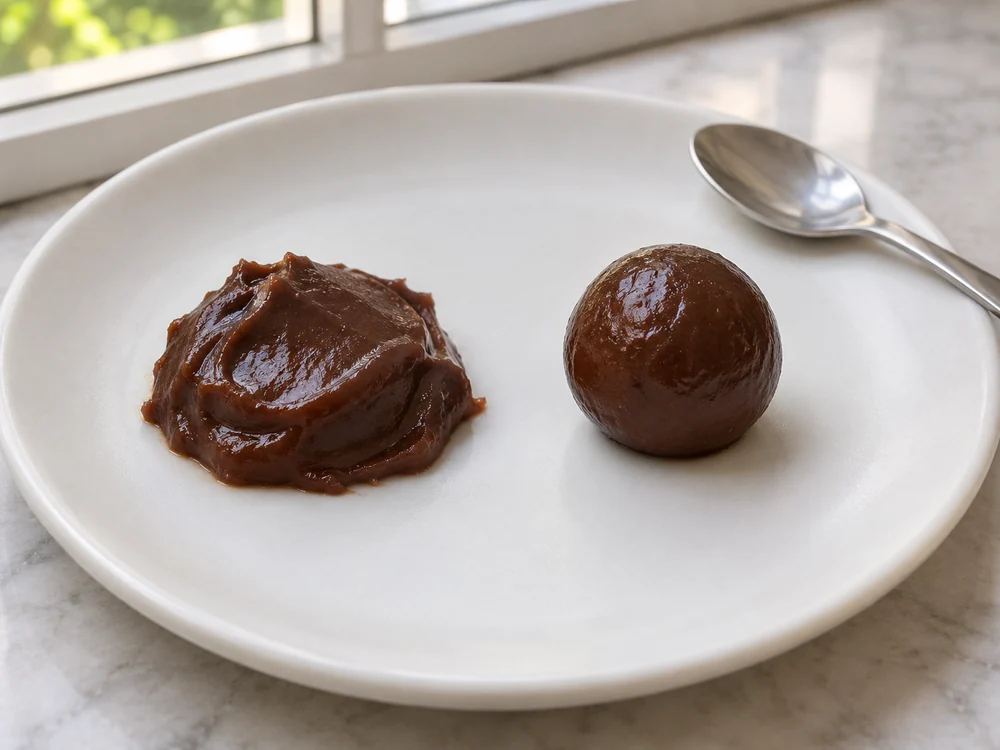
Transfer a small dab to a clean saucer with a spoon. Keep the main pan off the burner while you wait. Once the dab has cooled enough to handle, try pushing it together with the spoon. It should gather into a soft lump. Roll a little between clean, very lightly buttered palms only after it has cooled. A tacky surface helps the sprinkles stick. A piece that flattens into a puddle still needs attention.
The first comparison is warm versus cool. A warm dab can feel looser than it will after cooling. The second is sticky versus slack. A cooled dab may cling slightly to your fingers and still be ready. A cooled dab that coats your fingers heavily and will not hold a shape needs a little more cooking, assuming the ingredients were measured as described. Avoid adding dry cocoa to thicken it because that would change the flavour and can leave dry grains.
| What you see | What to do |
|---|---|
| The hot mixture closes the trail straight away | Keep stirring over low heat and repeat the spatula check. |
| A clear trail appears, but the test dab is still warm | Leave the pan off the heat and wait until the dab is cool enough to assess. |
| The cooled dab sticks a little and holds a ball | Transfer the batch to a shallow plate and cool it enough to handle. |
| The cooled dab spreads and cannot be rolled | Cook a little longer over low heat, then repeat the same cooled-sample check. |
| The cooled candy crumbles or has a scorched flavour | For a clean rolled result, start again and check earlier at a lower heat. |
How firm you want the sample depends on how you plan to serve it. If a batch has been handled safely and is simply too soft to roll, serving it in little cups as a soft chocolate sweet is an option. Use the handling limits below to judge safety. Andressa Vieira’s brigadeiro guide shows the rolled style and gives examples of other Brazilian sweets made with similar ingredients.
Portion, roll and coat
Scoop one piece first, about the size you want to serve. Roll it gently between your palms. If it stays round, use it as a comparison for the rest. Keep the portions close in size so they fit the same paper cups. If you need a specific number for a gift box, weigh the cooled mixture and divide by your target portion size before you roll. For example, a hypothetical 172 g of cooled mixture gives ten portions of 17 g with about 2 g left over, before any coating. That is sample arithmetic, not an expected yield.
Use just enough butter to stop the mixture clinging to your hands. If you can see a thick smear, wipe off the excess before handling the candy. Put a few rolled pieces on a clean plate, then move them through the sprinkles in small groups. That keeps the unused coating clean and saves you from picking sprinkles out of the next uncoated piece.
Press the coating gently. A small gap in the sprinkles is fine. If the ball squashes as soon as you drop it into the paper cup, check whether the mixture is still warm or too soft to hold. If one piece rolls but the rest stick, wash and dry your hands and check again before changing the whole batch.
Serve a small batch and store the rest promptly
Cool the main batch in the refrigerator after spreading it in a shallow dish. Bring out the portion you are about to roll or serve and return the rest promptly to a covered container in the refrigerator. USDA’s general leftover guidance calls for refrigeration at or below 40°F (4°C, rounded) within two hours, or within one hour when it is above 90°F (32°C, rounded). Discard perishable sweets that have sat out beyond that limit. This recipe has no measured shelf life. For gifting, keep the sweets cold in transit and tell the recipient they contain milk and need refrigeration.
If you like a mixed sweet plate, try putting the brigadeiros beside another small, separately prepared sweet, such as coconut ladoos. Serve the sweets separately so guests can choose the coating and you can describe the ingredients accurately. For a crunchier contrast, see our guide to chocolate candy bars with nuts. Keep nut-containing sweets on their own plate and flag the ingredients for guests.
What to write down before you make it again
Put the pan size, condensed milk brand, cocoa, and cooked weight on a note. Record what the cooled sample did at the point when you stopped. If you want a slightly softer centre next time, run your first sample earlier and change the endpoint before changing ingredients. That way you can tell whether cooking time, cocoa or a different pan made the difference. Test one half-batch before increasing the quantity, especially if the sweets are for a party. With twice the mixture in the same pan, the depth changes and a familiar timer may get you to the wrong texture.