
Start a small batch of coconut ladoo with 100 g sweetened condensed milk, 2 tablespoons milk and ¾ cup unsweetened desiccated coconut. Stir over low heat until the mixture holds together, then let a spoonful cool and see whether it rolls without sticking heavily to your fingers. Keep a little more coconut nearby so you can adjust for the texture of your packet.
This is a small-batch adaptation of Swasthi’s condensed-milk and desiccated coconut method. The quantities are a starting point scaled from that recipe. The exact number of sweets and the cooking time will depend on how much coconut you use, your pan, and how large you roll them. Make the first batch for a small plate rather than counting on a particular gift-box yield.
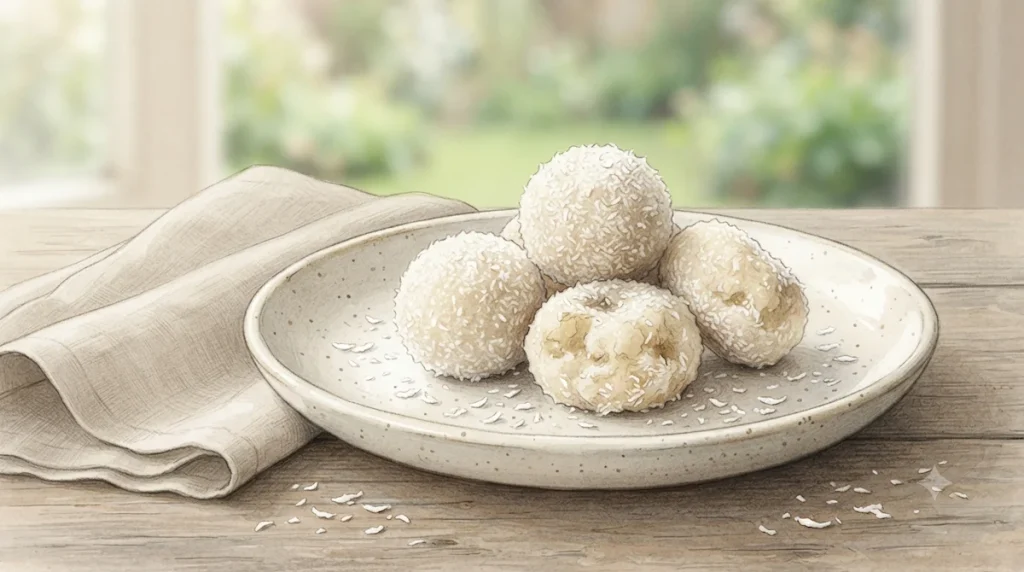
Small-batch condensed milk coconut ladoo
- 100 g full-fat sweetened condensed milk
- 2 tablespoons plain milk
- ¾ cup fine, unsweetened desiccated coconut to start, plus up to 2 tablespoons to adjust the mixture
- About 1 tablespoon additional desiccated coconut for rolling, with more if needed
- A small pinch of ground cardamom, optional
Set out a small heavy-bottomed pan, a flexible spatula or wooden spoon, a plate and a shallow dish for the coating. Weigh the condensed milk if you have a scale. Buy the smallest pack that works for your plans, or read the package’s instructions for refrigerating the unused portion before opening a larger tin.
Plan your portions before you roll. For example, if the cooked mixture weighs 160 g, eight 20 g portions would use it all before the coating. That is an example of how to calculate the yield. Weigh the batch after cooking if you need a precise count. It is easier to make equal sweets from the actual weight than to guess how much water your pan will drive off.
Choose the coconut and milk before you heat the pan
For this batch, choose fine, unsweetened desiccated coconut. The strands are short and dry, so a small spoonful can hold together without many rough edges. Coarsely shredded coconut makes a more textured sweet and may absorb the dairy differently. If that is all you have, try a small batch first and use the cooled-spoonful check below before adding more coconut.
Sweetened flakes are a different product. The condensed milk brings plenty of sugar, so starting with coconut that already has added sugar makes it harder to control the result. Read the ingredient list if the package does not say unsweetened on the front. Set aside the coating amount before you start cooking, so you still have dry coconut to roll the finished ladoos in.
Use sweetened condensed milk. Evaporated milk has a different sugar content and consistency and will not bind this mixture the same way. The small amount of ordinary milk in this version is separate. It helps moisten the dry coconut while it cooks. The Eagle Brand ingredient FAQ explains the difference between its condensed and evaporated milk products.
Fresh grated coconut has more moisture and a different texture. If you want ladoos made with fresh coconut, use a formula written for that ingredient. Nestlé’s coconut laddoo recipe starts with fresh coconut and gives its own method. Using fresh coconut here in place of the dry measure would change the amount of liquid the pan must lose.
How to cook, test and roll the ladoos

- Put the condensed milk, ordinary milk and the initial ¾ cup coconut in the pan. Stir while the pan is still cool so you can see whether every patch of coconut is moistened. Reserve the extra coconut for later.
- Set the pan over low heat. Stir and scrape along the bottom, the edges and the curve where they meet. If one patch begins to brown, lower the heat or lift the pan off the burner briefly. The aim is to thicken the mixture gently.
- Look for a soft mass that follows the spatula instead of immediately flowing back across the pan. It should still look moist. When it starts to gather, take the pan off the heat and put a small spoonful on a cool plate.
- Wait until the spoonful is comfortable to touch, then press it into a lump. If it holds, try rolling it lightly between your palms. If it spreads flat or leaves a thick smear, return the pan to low heat and stir briefly, or add a little reserved coconut if the mixture looks unusually loose.
- Stir in the optional cardamom. Move the mixture to a plate so it stops cooking in the pan. When it is cool enough to handle, divide it into small portions. Shape each one with just enough pressure to hold the coconut together.
- Roll each ladoo in the reserved coconut and set it on a clean plate. If the dry coating will not stick, press it lightly against the ball with your fingertips. Roll the next portion while it still has enough surface tack to hold the coating.
A small batch can thicken quickly when spread thin across a broad pan. Keep the burner low and watch the mixture. It can look loose one moment and start leaving a clear track the next. There is no benefit to scraping it around a hot pan after a cooled spoonful already passes the shaping test.
What the mixture should feel like
The cooked mixture should behave like a soft paste with small pieces of coconut in it. It can leave a little residue on your fingers. The problem is when it cannot hold a mound or the mixture squeezes out like a thick sauce. Check that behavior on a cool sample because warm sugar and milk are softer.
| What you notice | What to do |
|---|---|
| A cooled spoonful is soft but rolls into a ball | Stop cooking and start portioning when the rest is safe to touch. |
| The mixture holds a track in the pan but the sample still slumps | Give the sample time to cool. If it still slumps, stir the mixture on low for a little longer. |
| The mixture stays loose after extra stirring | Add reserved coconut a little at a time. Mix thoroughly and test a freshly cooled spoonful. |
| The ball holds but develops shallow cracks | Press the next portion together before rolling and stop dusting your hands with extra coconut. |
| The mixture has a burnt smell or a hard layer on the base | Stop heating. Start again over lower heat if the burnt flavor has spread through it. |
Make one full-size ladoo before rolling the rest. Put it on the plate briefly and look at the base. A small flat spot is normal. If the ball spreads into a low mound, the mixture needs attention before coating. If the only problem is that the coating looks patchy, fix the surface of that ball instead of changing the entire batch.
Keep the flavor simple for the first batch
A pinch of cardamom gives the coconut a clear fragrance. Add it after the mixture has thickened so you can stop when the aroma suits you. You can leave it out if the coconut smell is what you want on its own. Avoid adding a spoonful of a liquid flavoring to this small batch. That changes the mixture you have just adjusted to hold its shape.
If you like a nut garnish, you can press a small piece of chopped nut onto the top after rolling. Keep it optional and tell anyone you serve which nuts you used. The plain version already contains dairy. Check all ingredient labels and avoid assuming a shared kitchen or packet is suitable for someone with a food allergy.
Serve and refrigerate the ladoos
These are a home-prepared dairy sweet. Serve the portion you want and refrigerate the rest promptly in a covered container. If you are putting the sweets into a gift box, keep them cold for transport and tell the recipient they contain milk and need refrigeration. Keep the unused condensed milk covered in the refrigerator according to its package directions. The time a manufacturer gives for its opened product is separate from the storage of a prepared dessert.
For home leftovers, follow the USDA’s general refrigeration guidance, which calls for chilling at or below 40°F (4°C) within two hours, or within one hour when the surrounding temperature is above 90°F (32°C). This recipe adaptation does not establish a separate shelf life. If the sweets have been sitting out beyond that window, chilling them later does not reset it.
If you are preparing sweets for a gathering, portion them before the guests arrive and set out just what will be eaten soon. A small covered box with one layer makes it easier to avoid pressing the coconut coating off the tops. Chill the rest while you serve the first plate. That leaves you with a little extra for a second helping without asking the whole batch to sit out.
Questions before you make a second batch
Can you double it? You can weigh twice the ingredients, but a deeper layer takes more attention and may thicken differently. Use a larger pan with room to stir and rely on the cooled spoonful rather than doubling a time estimate. For a first gift order, make one batch before committing to multiple tins.
Can you make smaller pieces for a mixed sweets plate? Yes. Divide the cooked mixture into smaller portions before you add the coconut coating. As the pieces get smaller, you expose more surface for the same amount of filling, so put a little extra dry coconut in the coating dish.