
Hotteok are Korean filled pancakes with a browned outside, a chewy middle, and, in this version, cinnamon and brown sugar inside. For a small batch, divide a soft yeast dough into four portions, pinch the filling inside, and cook the pancakes in a shallow film of oil. The syrup can be much hotter than the crust feels. Rest each pancake before opening it, and open it away from your face over a plate.
This is a small-batch adaptation of Maangchi’s hotteok recipe. It uses ordinary all-purpose flour and water. Korean hotteok comes in many forms, including versions with sweet rice flour and seed-rich fillings. Korean Bapsang explains several variations, including Busan-style seed hotteok. This version keeps the filling inside the dough from the start, with a target yield of four pieces.
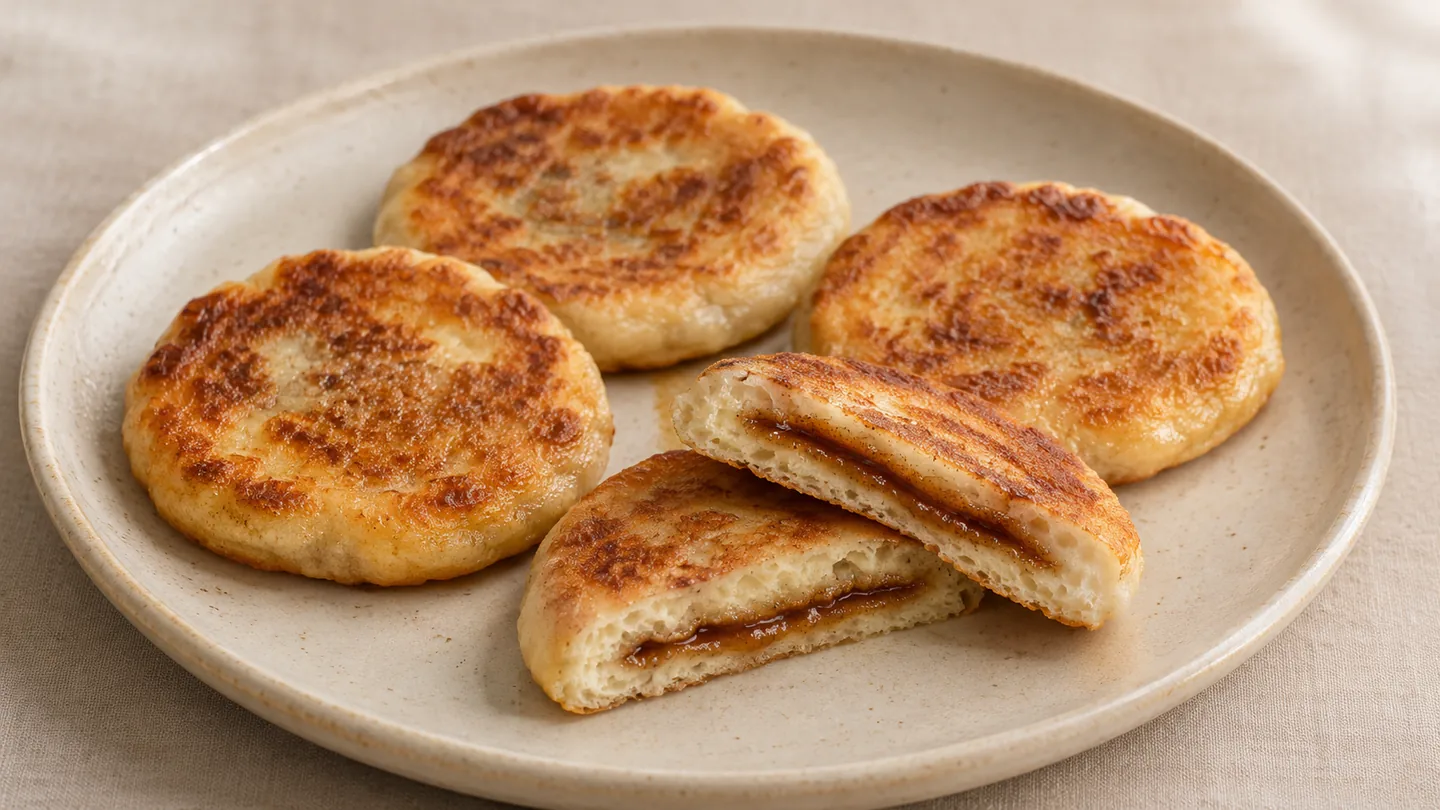
Ingredients for four small hotteok
For the dough
- 1 cup all-purpose flour, about 120 g when lightly spooned into the cup and levelled. Keep more flour nearby for the work surface.
- 1/2 cup lukewarm water, about 120 mL.
- 1 tablespoon granulated sugar.
- 1 teaspoon dry yeast. Check the packet for its mixing method and water temperature.
- 1/4 teaspoon kosher salt, following the volume in the scaled recipe.
- 1 1/2 teaspoons neutral vegetable oil for the dough, plus a little more for the pan.
For the filling
- 1/4 cup brown sugar. Light brown sugar works for this filling.
- 1/2 teaspoon ground cinnamon.
- 1 tablespoon finely chopped walnuts, optional. Omit them for a simpler cinnamon filling and leave enough dough around the filling to seal it.
You’ll need a bowl and cover, a board or clean counter, a small nonstick skillet and a broad spatula. The flour contains wheat and the walnuts contain a tree nut allergen. For anyone with a food allergy, read labels on all ingredients and check cross-contact where the hotteok will be prepared. See the FDA’s food allergy guidance. Avoid tasting the uncooked dough. Flour is raw unless treated for ready-to-eat use, as the FDA explains in its flour safety guide.
Mix a dough that stays soft enough to pinch
Combine the flour, water, sugar, yeast, salt, and oil according to your yeast packet. Some active dry yeast products direct you to dissolve the yeast in warm water first. For an instant yeast product that goes straight into flour, stir it through the flour, then add the water and other ingredients. Use the measured half cup of water for the dough, including any water used for dissolving the yeast.
Stir until no distinct streaks of dry flour are visible. The dough will look softer and stickier than dough you’d roll for flatbread. That’s useful when you come to wrap it around the sugar. If it clings to the spoon, scrape the sides down and leave it to rise before adding more flour. A dough that’s stiff from extra flour can be difficult to pinch together.
Cover the bowl and leave it at room temperature until the dough looks puffy and roughly doubles. Maangchi gives about an hour for the first rise in the source recipe. Watch the dough for change instead of relying on the clock, especially if your kitchen is cool. Gently press out the largest bubbles, cover it again, and let it rest. Maangchi gives another 10 to 20 minutes for the second rise. While it rests, mix the sugar, cinnamon, and finely chopped walnuts.
Fill and seal without getting sugar in the seam
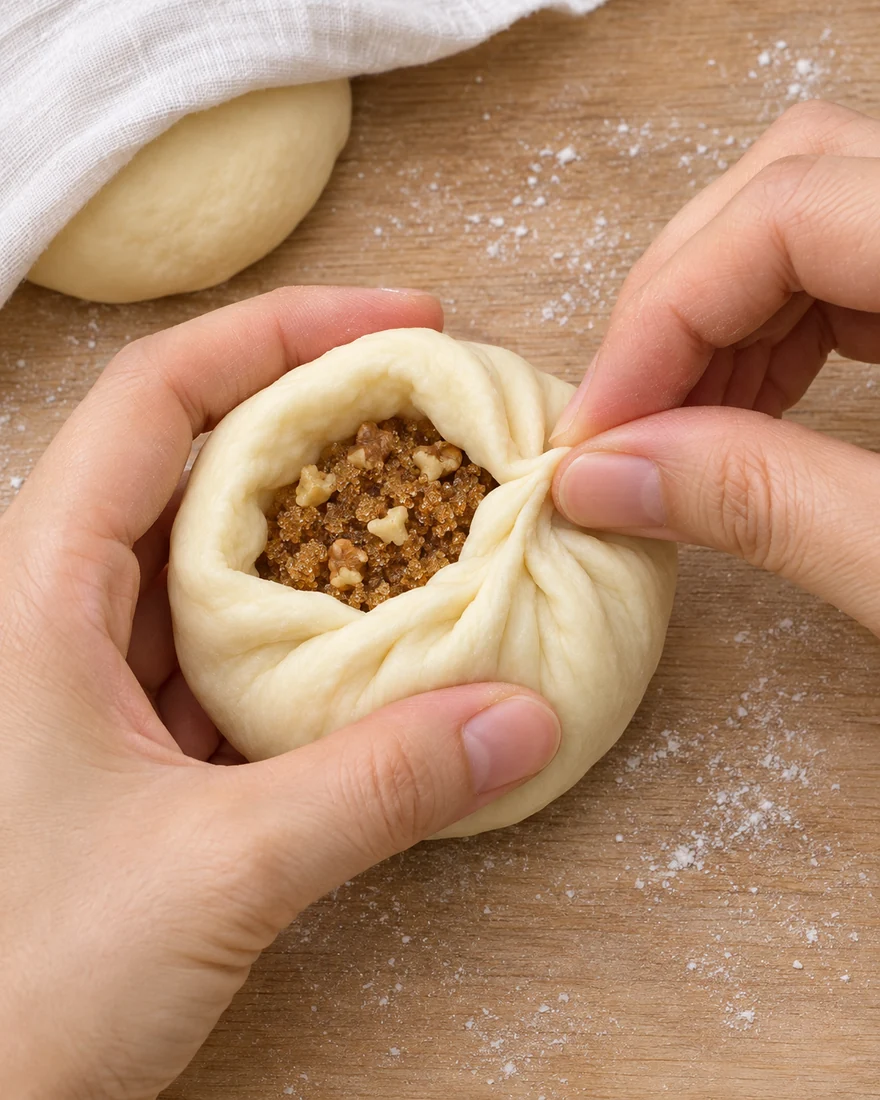
- Divide the dough into four. Lightly flour a clean board and turn out the dough. Use a scraper or sturdy knife to divide it. Cover the portions you’re waiting to fill so the outside stays soft.
- Make a cup. Flatten one piece in your palm or on the board, leaving a slightly thicker centre. Put some filling in the middle, staying away from the edge. Aim for roughly a quarter of the mixture and use less if the dough won’t close easily. The exact amount that fits depends on the thickness of the portion and the size of the nut pieces.
- Close the bundle. Bring up opposite edges, then gather the remaining sides over the filling. Pinch several times until you can no longer see a gap. If sugar lands on the edge, brush it back into the centre before pinching. Set the bundle down gently with the seam underneath.
- Check the first parcel closely. Look for a tight seam and an even thickness around the sides. If you can see sugar through a tiny tear, pinch the soft edges together. If a large split won’t close, remove some filling and reshape before the parcel touches the pan.
Pan-fry the first pancake before rushing the batch
Warm a small nonstick pan over medium heat with enough neutral oil to lightly cover the cooking surface. Use a spatula to lay the first filled round seam-side down. It should sizzle gently. If the oil is smoking or the dough browns almost immediately, stop adding pancakes and lower the heat. Follow the pan maker’s temperature limits for nonstick cookware.
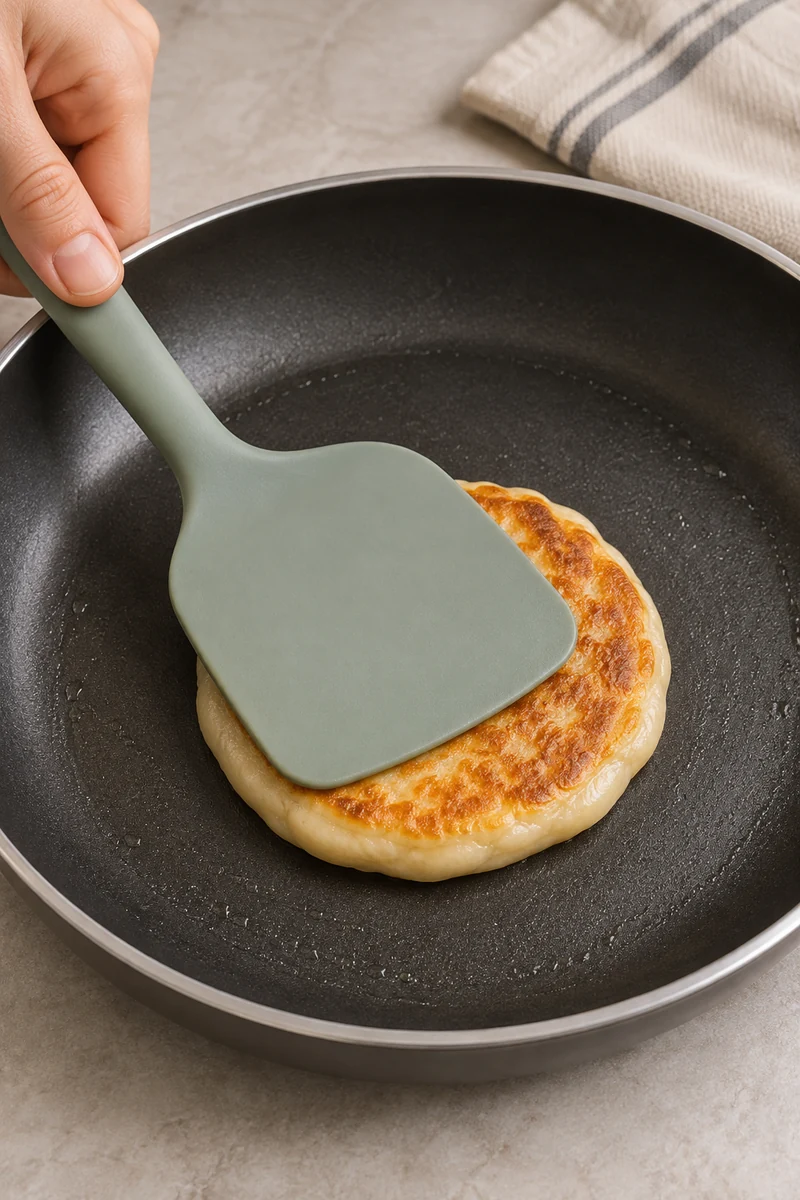
Once the underside holds its shape and has started to colour, turn the pancake over. Use the flat side of the spatula to press it into a disk gradually. Stop pressing if sugar pushes toward a visible weak spot. Brown the other side, turning again and reducing the heat as needed so the dough can cook through while the filling melts. Maangchi finishes the pancake on low heat once flattened. Pan weight, burner size, and dough thickness will all affect how long yours needs.
Lay the cooked pancake on a plate and give the syrup time to cool. Open the first one carefully at the edge, pointing the opening away from you. Look for cooked dough around the filling, with a tender bread-like interior rather than a wet or gummy band of raw dough. If the outside has browned while the dough is still raw in the centre, use lower heat and give the next pancake more time. Set an undercooked pancake aside and return it to the pan only if the parcel is intact and you can handle it safely.
If the filling leaks in the pan, avoid pressing the pancake harder or scraping at hot syrup while the pan is over the heat. Take the pan off the burner and allow it to cool enough to clean safely. Use fresh oil for the next pancake if the sugar has burned. For young children, an adult should open and cut the pancake when it has cooled enough to serve, because the filling can stay hot after the crust cools.
Three ways to solve a frustrating first batch
The dough won’t rise. Give it longer if the room is cool, and check whether the yeast packet is in date. A dough that has become a little puffy is still showing activity. If there’s no visible change after giving it reasonable time in a comfortably warm room, start again with fresh yeast and water prepared according to its directions.
The seam opens as you press. Reduce the filling in the next pancake, or make the centre and sides a little thicker before wrapping it. Chop the nuts small enough that they won’t stick out into the seam. Press after one side firms and use several light presses instead of one forceful push. Make the first couple of pancakes individually until you know how the dough behaves.
The filling is grainy. Check if the pancakes have actually cooked through before you change the sugar. If the outside browned quickly, lower the heat and cook the next one a little more gently. Some crystals or nut pieces will still give texture. Brown sugar and a bit of cinnamon are plenty for the first batch. Changing the sugar, dough, and heat together makes it difficult to tell what helped.
Use wheat flour for this batch and save variations for later
All-purpose flour keeps the ingredient list short, so the main things to learn are how the soft dough feels and how hard to press it. Korean Bapsang and Jackie Ji Yoon Park’s Food Network recipe use a mixture of wheat flour and sweet rice flour. Those formulas are useful when you want to try the texture of a mixed-flour hotteok. Their liquid amounts and frying methods differ, so use the directions for the version you choose. If you want a small change to this batch, leave out the walnuts before changing the dough. The cinnamon and brown sugar still give you a filling you can pinch closed and check after cooking.
Serve the pancakes warm
Give each person a small plate so the syrup has somewhere to go. If you’re sharing four pancakes among two people, serve the first two after they’ve rested and cook the remaining two while the pan is ready. For another warm stovetop treat, try our hot chocolate for two. If you want sweets you can make earlier and plate for a gathering, see our small-batch brigadeiros.
If you need to get ahead, mix the dry filling before making the dough and measure the remaining ingredients separately. Then cook the pancakes shortly before serving. The syrup makes it awkward to hold a filled, uncooked batch for later. Korean Bapsang suggests freezing cooked hotteok for longer storage. If you choose to reheat one, keep it on a surface that can catch drips and let the filling cool again before you take a bite.
The best cue to look for in the final pancake is a seam that still holds when you turn it. Once you’ve worked out the right amount of filling and the pressure you need to flatten the first one, repeat those steps with the other three. Wait until it is comfortable to handle before biting in.