
Good Friday dinner occupies a strange space in the holiday calendar. It’s not the exuberant feast of Easter Sunday—no pastel eggs, no chocolate bunnies, no honey-glazed ham. It’s quieter, more contemplative. Yet it’s still a family dinner, still a moment that asks for something special. The challenge? Traditional meatless meals often lean light, even austere. A simple fish fillet. Vegetable soup. Perhaps cheese ravioli if you’re feeling ambitious.
But here’ssatisfaction: after a long week of work and Lenten observation, your family doesn’t want austere. They want satisfying, creamy, cheesy, deeply savory comfort that happens to be meat-free. They want this kale and potato gratin.
This is not your average vegetable side dish. Layered like a French potato dauphinoise but fortified with Tuscan kale, garlic, and two kinds of cheese, it emerges from the oven bubbling, bronzed, and substantial enough to stand alone as a main course. Pair it with crusty bread and a bitter green salad, and you have a Good Friday dinner that feels like a feast—without breaking the rules or keeping you chained to the stove.

Read More– Five-Spice Glazed Duck for Easter: A Showstopping Centerpiece Recipe
Why This Gratin Works for Good Friday
It’s Unapologetically Hearty. Lenten meals shouldn’t feel like punishment. This gratin delivers the creaminess of scalloped potatoes, the savory depth of slow-cooked greens, and the golden, cheesy crust everyone fights over.
It’s Make-Ahead Friendly. Good Friday is often a workday for many of us. This gratin can be assembled completely in advance and baked when you walk through the door.
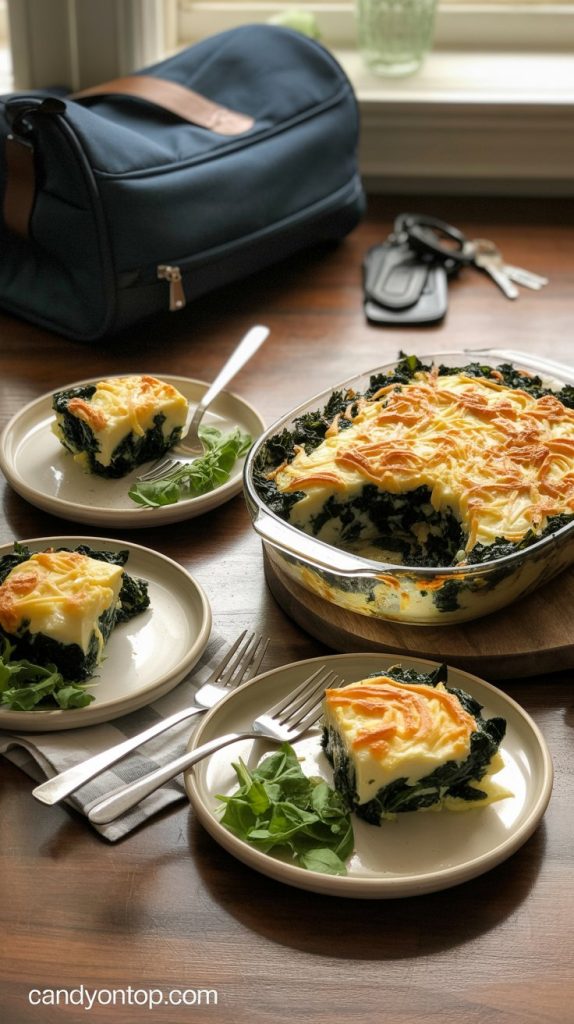
It Uses Humble Ingredients. Potatoes, kale, cream, cheese, garlic. Nothing exotic, nothing expensive, nothing that requires a specialty grocer. These are pantry and farmers’ market staples elevated through technique.
It Travels Well. Bringing dinner to a relative’s house? This gratin holds its structure, reheats beautifully, and transports without anxiety.
It Satisfies Meat-Eaters Too. The question “Where’s the protein?” rarely comes up when generous cheese and eggs are involved. This gratin is rich, complete, and deeply fulfilling.
Ingredient Notes: Choose Wisely for Best Results
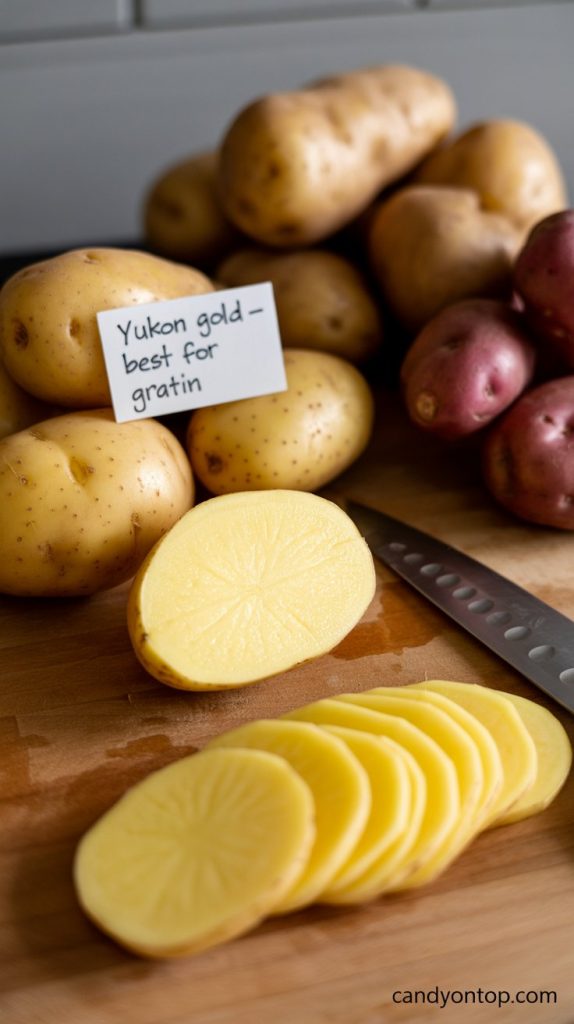
Potatoes: Yukon Golds are the uncontested champion here. Their medium starch content and buttery flavor create the ideal texture—tender, not waterlogged. Russets work in a pinch but require slightly more careful slicing to prevent disintegration. Red potatoes are too waxy; they never fully soften into the creamy matrix you want.
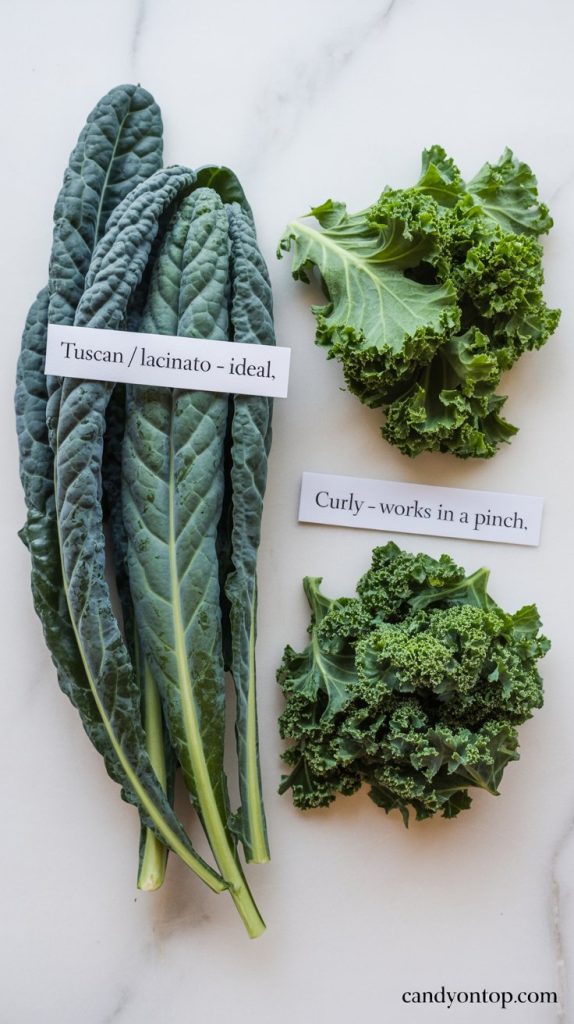
Kale: Tuscan kale, also called Lacinato or dinosaur kale, is superior to curly kale for this dish. Its flat, sturdy leaves soften beautifully without becoming slimy, and its slightly sweet, earthy flavor stands up to cream and cheese. Curly kale works if that’s what’s available—just remove the thick stems and chop thoroughly.
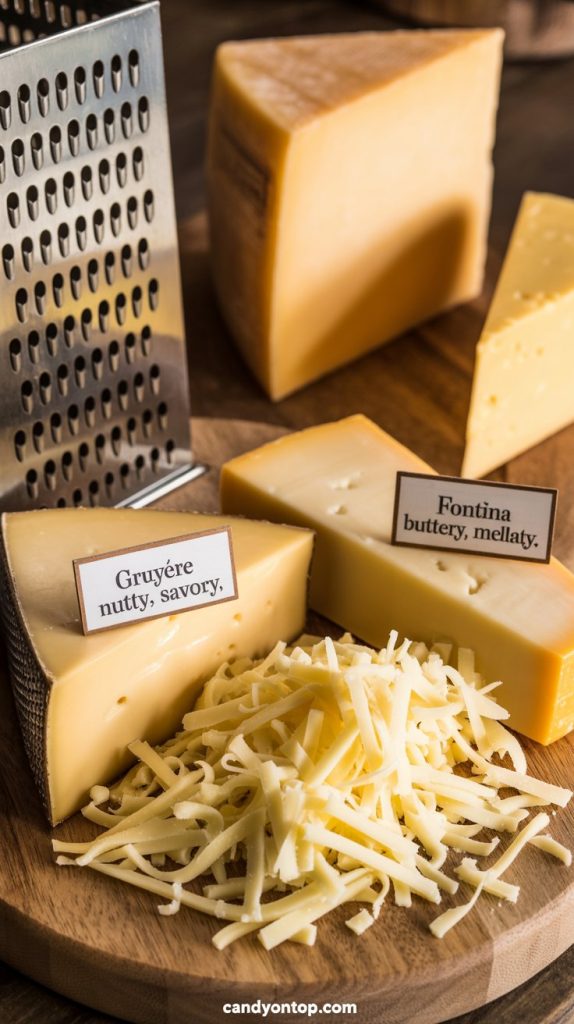
Cheese: Use two. Gruyère melts like a dream and brings nutty, complex savoriness. Fontina adds buttery richness and exceptional meltability. If budget is a concern, substitute high-quality Swiss cheese for Gruyère and provolone for fontina. Pre-shredded bagged cheese contains anti-caking agents that sabotage smooth melting—grate your own.
Cream: Heavy cream is traditional, but half-and-half works beautifully with slightly less richness. Do not use milk alone; the gratin will be watery and refuse to set.
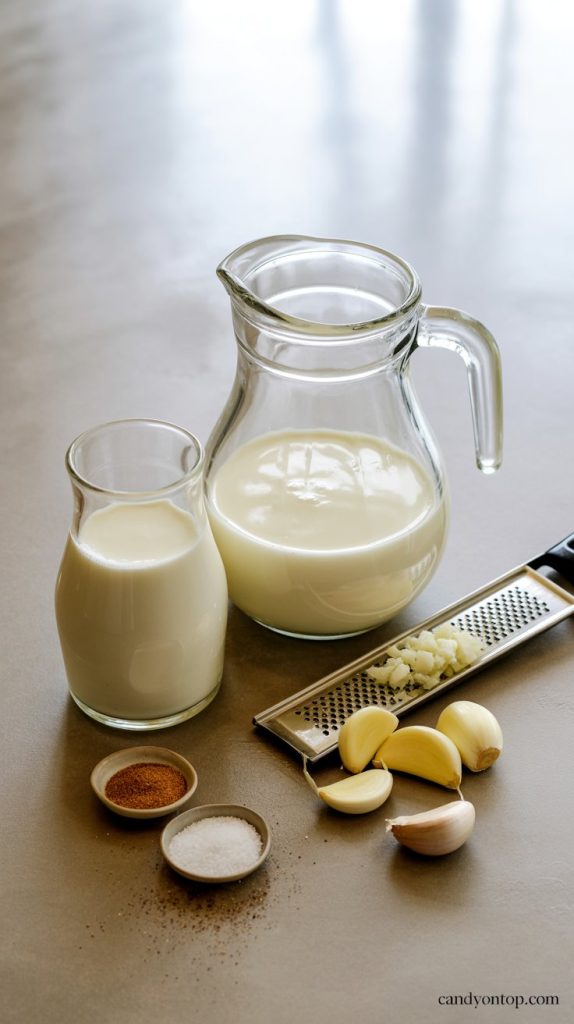
Garlic: Fresh only. Grate it on a microplane or crush it to a paste. Dried garlic powder cannot replicate that sharp, aromatic edge that cuts through the dairy.
The Recipe: Kale and Potato Gratin
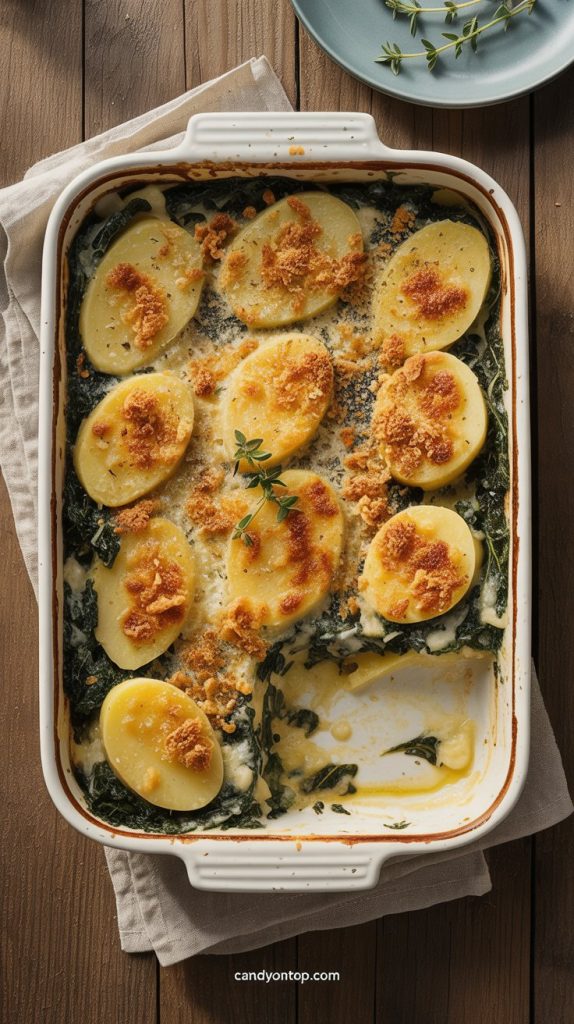
Serves 6-8 as a main, 10-12 as a side
Ingredients
For the Gratin:
-
2½ pounds Yukon Gold potatoes, scrubbed clean (peeling optional)
-
1 large bunch Tuscan kale (about 12 ounces), stems removed, leaves roughly chopped
-
2 tablespoons unsalted butter, plus more for dish
-
4 cloves garlic, grated or minced
-
1½ cups heavy cream or half-and-half
-
1 cup whole milk
-
1 teaspoon kosher salt, plus more for layers
-
½ teaspoon freshly ground black pepper
-
¼ teaspoon freshly grated nutmeg
-
Pinch cayenne pepper (optional, for warmth)
The Cheese Layer:
-
1½ cups grated Gruyère cheese (about 6 ounces)
-
1 cup grated fontina cheese (about 4 ounces)
-
¼ cup finely grated Parmesan cheese
For the Topping:
-
½ cup panko breadcrumbs
-
2 tablespoons melted butter
-
2 tablespoons grated Parmesan
-
Fresh thyme leaves (optional)
Step-by-Step Instructions
Step 1: Prepare Your Potatoes and Kale
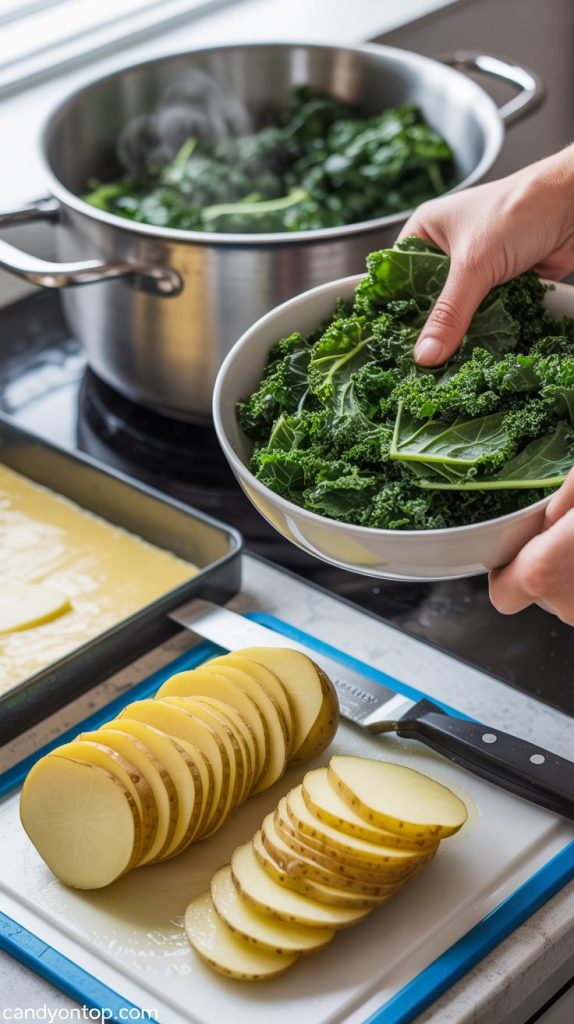
Preheat oven to 375°F with a rack in the center position. Butter a 9×13-inch baking dish (or similar 3-quart gratin dish) generously.
Slice potatoes ⅛-inch thick. A mandoline is ideal here—it ensures uniform thickness and even cooking. If slicing by hand, take your time and aim for consistency.
Bring a large pot of salted water to boil. Add chopped kale and cook 2 minutes until bright green and slightly wilted. Drain immediately and rinse with cold water to stop cooking. Squeeze handfuls firmly to remove as much water as possible. Wet kale makes watery gratin.
Step 2: Make the Cream Base
In a medium saucepan, combine cream, milk, grated garlic, salt, pepper, nutmeg, and cayenne. Warm over medium heat until steaming—do not boil. Remove from heat.
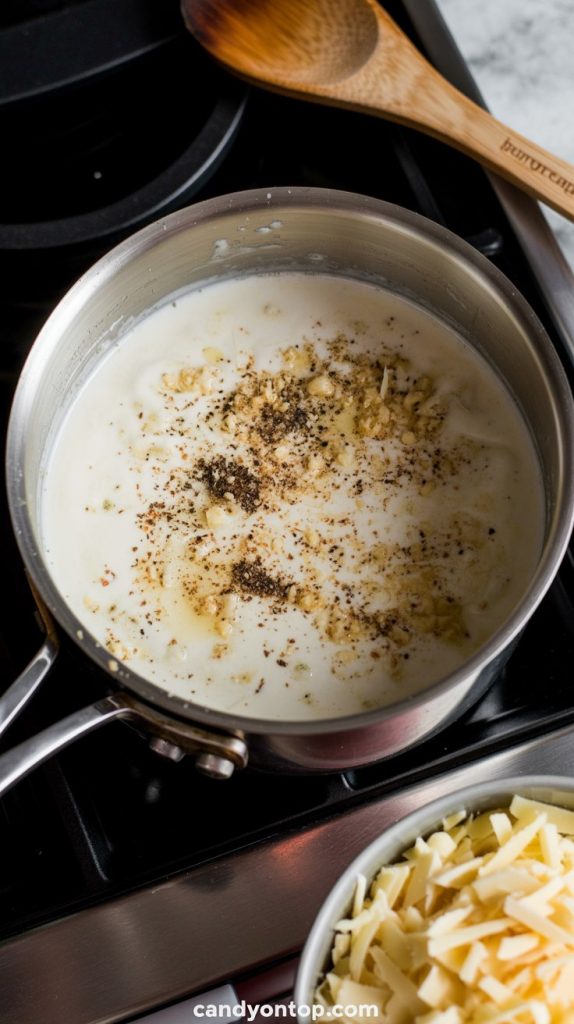
Combine Gruyère and fontina in a bowl. Toss together with your fingers.
Step 3: Layer the Gratin
This is an assembly line, not a science project. Work in three layers:
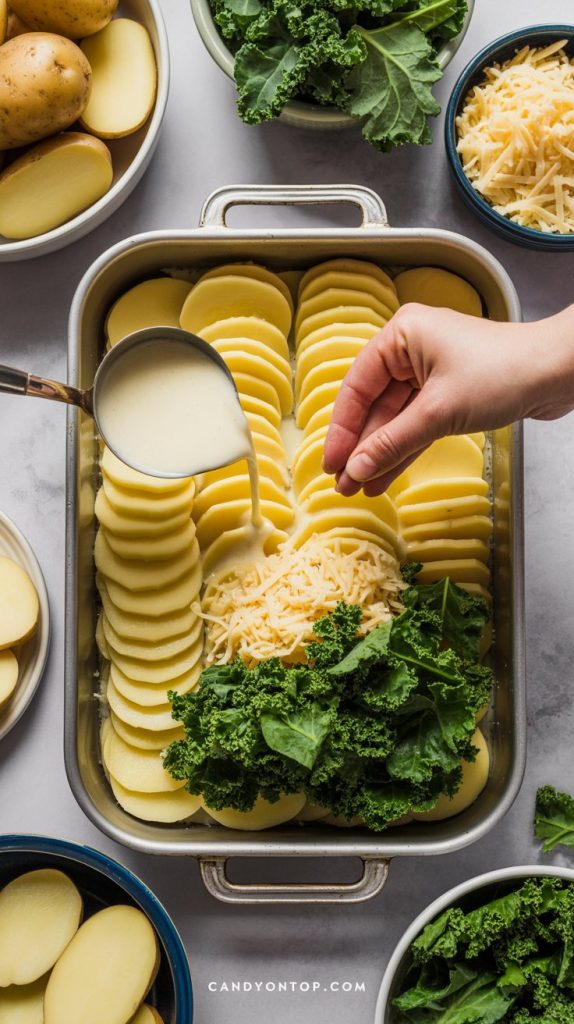
First Layer: Arrange one-third of potato slices in overlapping rows. Scatter half the blanched kale. Sprinkle with one-third of the cheese mixture. Pour one-third of the warm cream mixture over everything.
Second Layer: Repeat: half the remaining potatoes, all remaining kale, half the remaining cheese, half the remaining cream.
Third Layer: Arrange final potato slices in an attractive, overlapping pattern. Pour remaining cream over top. Sprinkle with remaining cheese.
Press down gently with a spatula to ensure cream reaches every crevice.
Step 4: Initial Bake
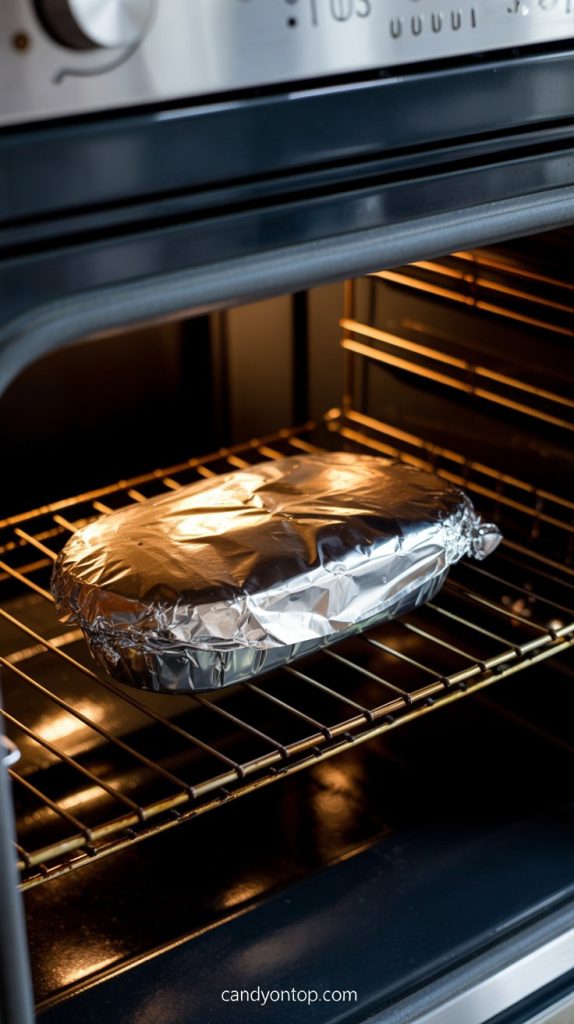
Cover dish tightly with foil. Bake 45 minutes. The potatoes should be nearly tender when pierced with a knife.
Step 5: Add Crispy Topping
While gratin bakes, combine panko, melted butter, Parmesan, and thyme leaves in a small bowl. Mix until crumbs are evenly moistened.
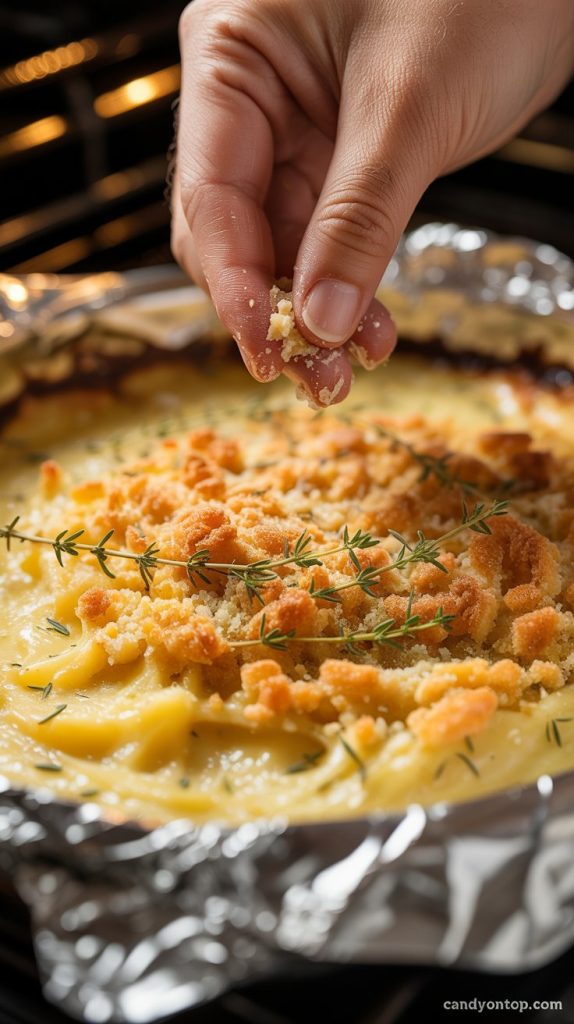
Remove foil from gratin. Sprinkle the breadcrumb mixture evenly over the surface.
Return to oven, uncovered, and bake 20-25 minutes longer until top is deeply golden and crusty, and cream is bubbling thickly around edges.
Step 6: Rest Before Serving
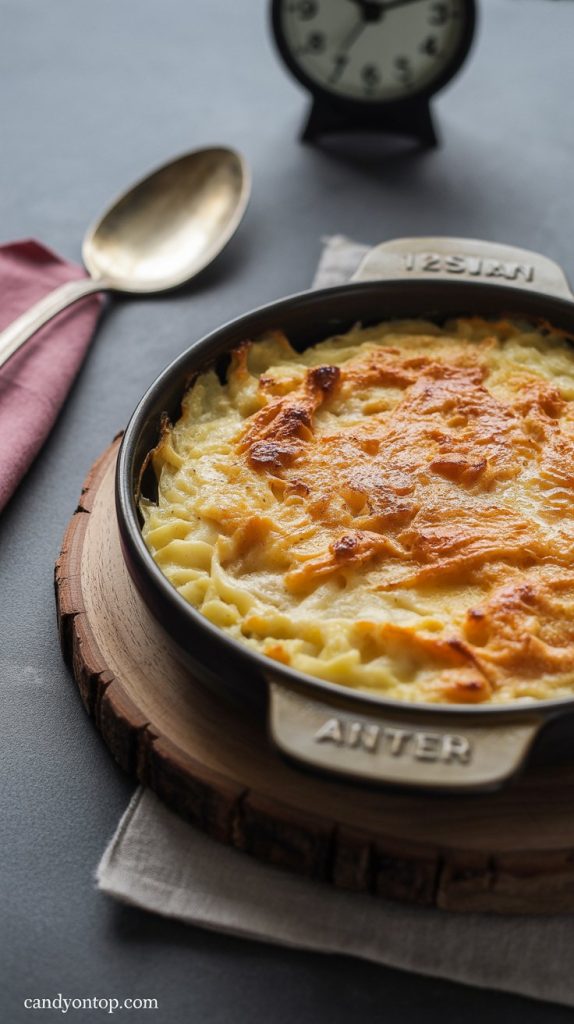
Remove from oven and let stand at least 15 minutes before serving. This rest period is essential—it allows the cream to absorb fully into the potatoes and the gratin to set into sliceable squares. A gratin sliced immediately will flood across the plate.
Six Variations to Make It Your Own
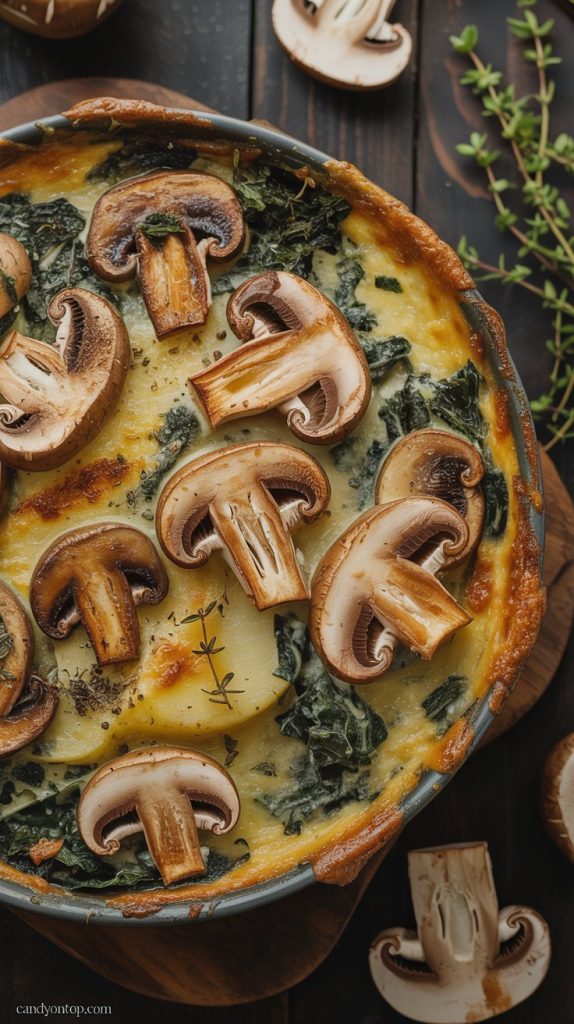
1. Mushroom and Kale Gratin: Sauté 8 ounces sliced cremini mushrooms in butter until golden and their liquid has evaporated. Layer with the kale. Adds deep, savory umami.
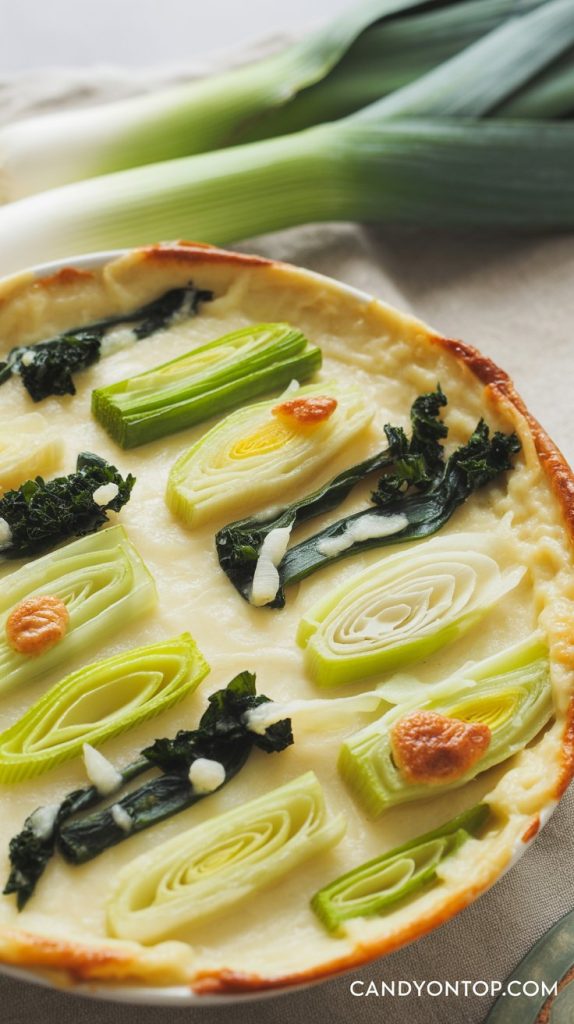
2. Leek and Potato Gratin: Replace kale with 2 large leeks, white and light green parts only, thinly sliced and sautéed in butter until very soft. More delicate, subtly sweet.
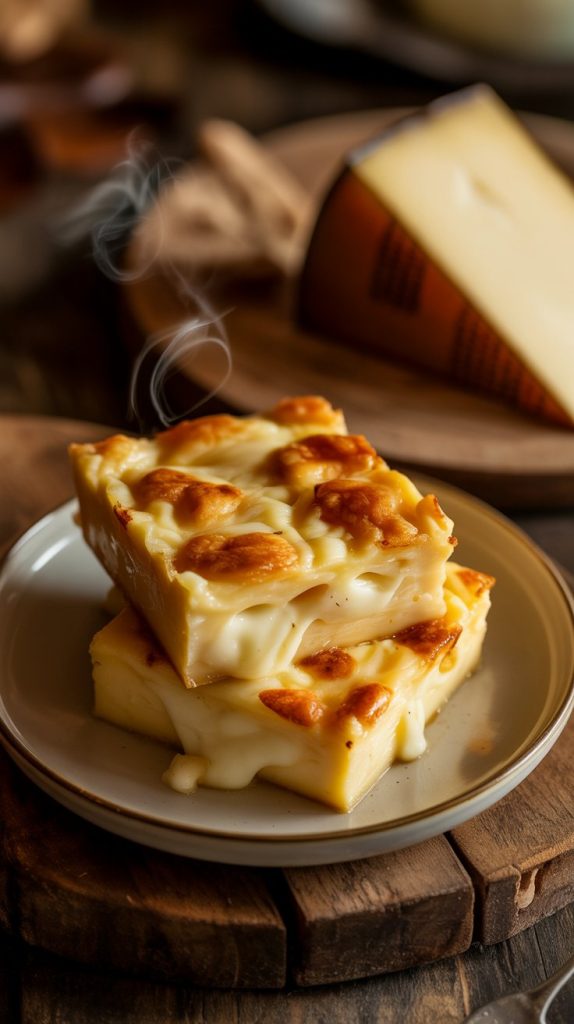
3. Smoked Gouda Gratin: Substitute smoked Gouda for Gruyère. The smoky notes are incredible with both potatoes and kale.
4. Spicy Sausage-Style (Meatless): Add ½ teaspoon fennel seeds, ¼ teaspoon red pepper flakes, and 1 teaspoon smoked paprika to the cream mixture. This mimics the warmth of Italian sausage without the meat.

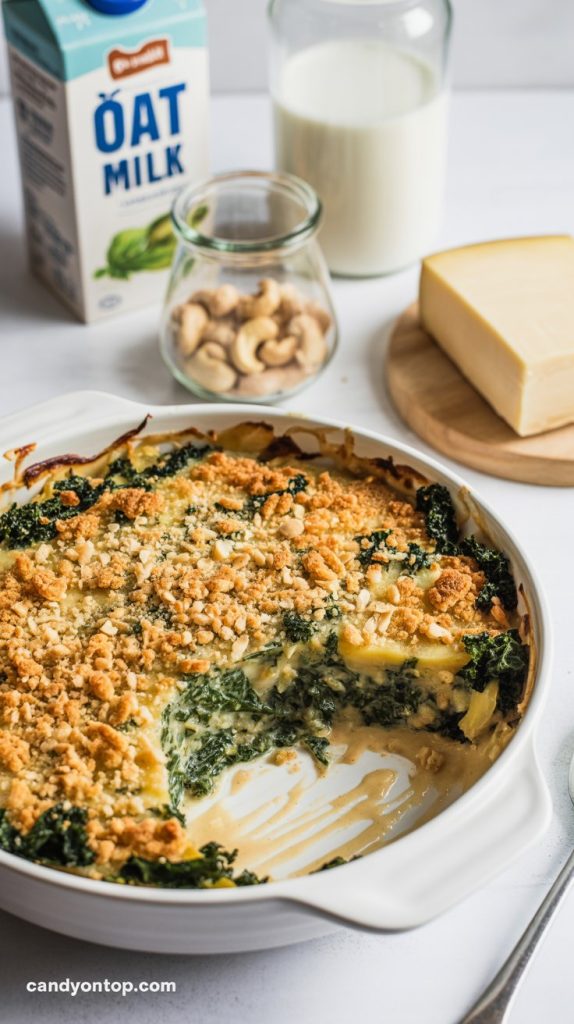
5. Vegan Adaptation: Use full-fat oat milk or cashew cream, nutritional yeast, and a high-quality vegan butter. Look for cultured vegan cheeses that actually melt—Miyoko’s and Violife perform best.
6. Individual Gratins: Assemble in 8-ounce ramekins. Reduce initial covered bake time to 25 minutes, then top and bake uncovered 10-12 minutes. Perfect for dinner parties.

What to Serve With It
Crusty Bread: A chewy sourdough or rustic country loaf is non-negotiable. You need something to drag through the creamy edges.
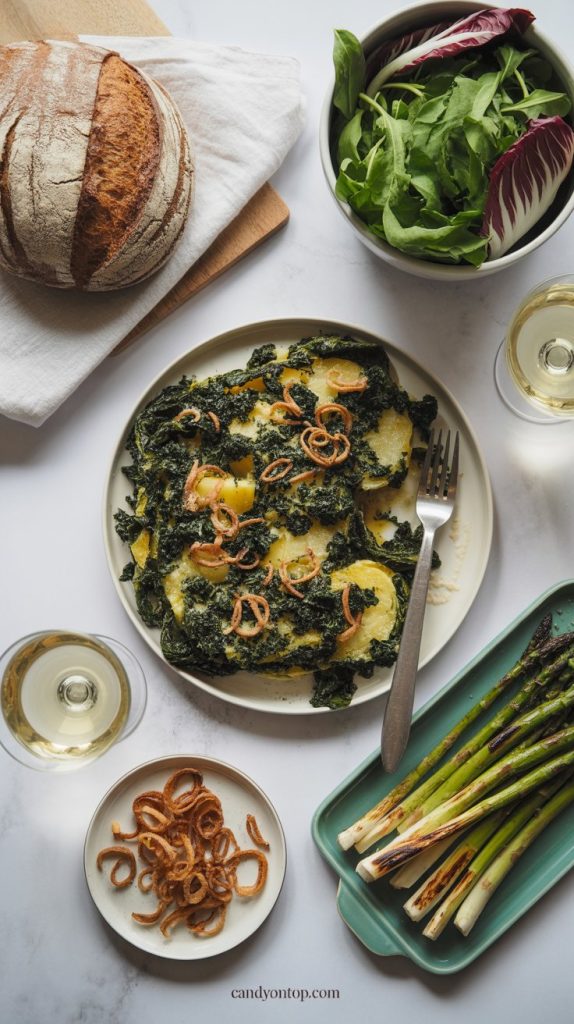
Bitter Greens Salad: Radicchio, endive, or arugula tossed with lemon juice, olive oil, and flaky salt. The bitterness cuts the gratin’s richness perfectly.
Roasted Asparagus: When in season, asparagus spears roasted with olive oil and salt until tender-crisp make an elegant, spring-appropriate accompaniment.
Poached or Fried Eggs: For extra protein and luxury, top each serving with a perfect jammy-yolked egg. The yolk becomes additional sauce.
Crispy Shallots: Fry thinly sliced shallots in olive oil until golden brown and drain on paper towels. Scatter over the finished gratin for crunch and allium punch.
Also Read- Top 10 Classic Easter Candies: The Timeless Baskets That Define Spring
Make-Ahead and Reheating Strategies
Fully Assemble, Bake Later: Prepare gratin completely through Step 3, but do not bake. Cover and refrigerate up to 48 hours. Add 15-20 minutes to the covered baking time when cooking from cold.
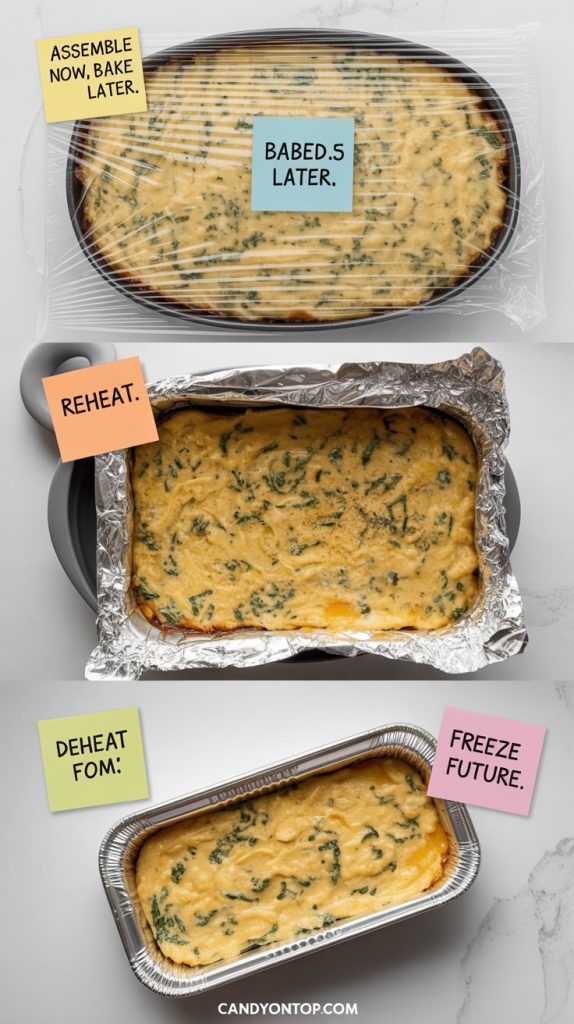
Bake, Cool, Reheat: Bake gratin fully, cool completely, and refrigerate up to 3 days. Reheat, covered, at 350°F for 20-25 minutes, then uncover for 5 minutes to re-crisp topping.
Freeze for Easter Future: Bake gratin in a disposable foil pan, cool completely, wrap tightly in plastic, then foil, and freeze up to 3 months. Thaw overnight in the refrigerator, then reheat.

Leftovers: This gratin might be even better the next day. Cut into squares and pan-fry in butter until golden and crisp on both sides. Serve with a fried egg for an incredible post-Easter breakfast.
Troubleshooting Your Gratin
Too Watery? Your kale wasn’t squeezed dry enough, or your potatoes released excess moisture. Next time, wring kale in a clean kitchen towel. Also, Yukon Golds are less watery than Russets.

Curdled Cream? Your oven temperature was too high, or you boiled the cream mixture. Cream should be warmed, not simmered. Bake at 375°F, not higher.
Top Browned Too Fast? Your oven runs hot, or you used fresh breadcrumbs instead of panko. Tent loosely with foil for the final 10 minutes.
Not Setting Up? Let it rest longer. Gratin continues to set as it cools. Twenty minutes minimum.
Bland? Undersalting is the number one gratin mistake. Potatoes and cream need generous seasoning. Taste your cream mixture before pouring—it should taste assertively seasoned.
The Good Friday Table Argument for Gratin
Here’s what I love about this dish: it asks nothing of you except patience and presence. You layer. You wait, you trust the oven. There’s no last-minute searing, no precise internal temperature, no frantic sauce emulsification. It’s cooking as meditation, which feels right for a day that invites reflection.

And then you pull it from the oven, golden and bubbling, and suddenly the table feels complete. Not because you’ve proven something with culinary acrobatics, but because you’ve transformed humble ingredients into something that looks and tastes like care.
That’s the point of Good Friday dinner, I think. Not to compete with Sunday’s feast, but to quietly, reverently, deliciously prepare for it. This gratin does exactly that.
Serve it with a green salad, a good bottle of dry Riesling, and the people you love most. That’s a holy meal by any measure.