
Easter dinner has a predictable rhythm. Ham, scored and cloved, bakes under a blanket of brown sugar. Lamb, rosemary-dotted, roasts to medium-rare. Both are worthy traditions, but neither sparks wide-eyed wonder at the table. This year, break the pattern with something truly unforgettable: five-spice glazed duck.
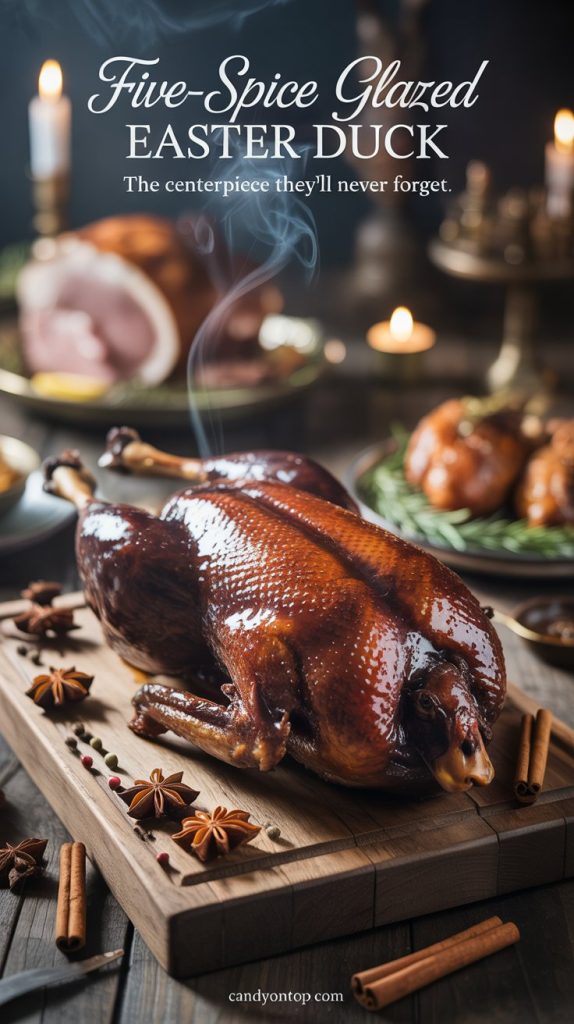
This is not your grandmother’s Easter duck. It’s a bird that arrives at the table lacquered in deep mahogany, its skin shatteringly crisp, its meat infused with the warm, aromatic embrace of star anise, cinnamon, and Szechuan peppercorn. The five-spice glaze clings to every curve, a glossy sheen that catches candlelight. It smells like celebration. It tastes like intention.
And here’s the secret: it’s far easier than the polished result suggests. This guide walks you through every step, from scoring the skin to achieving that perfect lacquer, so you can serve an Easter centerpiece that will be remembered long after the chocolate bunnies are gone.
Read more: Top 10 Classic Easter Candies: The Timeless Baskets That Define Spring
Why Duck Deserves Your Easter Table
Before we dive into technique, let’s talk about why duck is the ultimate holiday flex.
It’s Special Occasion By Design. Unlike chicken, which appears on Tuesday night dinner plates, duck retains an air of ceremony. Its richness demands attention. Its preparation signals effort. When guests see a whole duck emerge from the kitchen, they know something meaningful is happening.

It’s Surprisingly Forgiving. Duck’s generous fat layer acts as an insurance policy. It bastes the meat continuously, preventing dryness even if your oven temperature wavers. The margin between “perfect” and “still delicious” is remarkably wide.
It Pairs Beautifully with Easter Flavors. Spring’s gentle bitterness—think asparagus, pea shoots, radicchio—cuts through duck’s richness. Rhubarb, early strawberries, and blood oranges echo the citrus notes in five-spice. This is a bird made for April.
It Photographs Like a Dream. Let’s be honest: we’re all plating for the ‘gram now. Duck’s burnished skin, glossy with glaze, is objectively more striking than a ham steak.
Your Duck Primer: What to Buy
Choose Pekin (Long Island) Duck. This is the standard American breed, weighing 4½ to 5½ pounds. It’s widely available, reliably tender, and its skin crisps beautifully. If you’re feeding a crowd, buy two smaller ducks rather than one massive Muscovy.
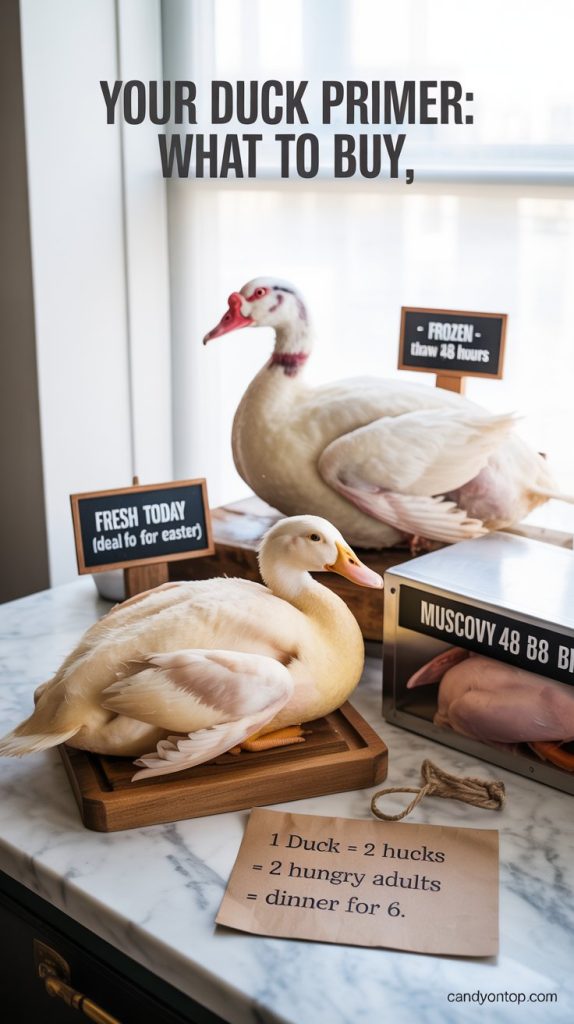
Fresh > Frozen, But Frozen Works. Fresh duck requires no planning beyond a trip to the butcher. But good frozen duck (Maple Leaf Farms is the gold standard) defrosts beautifully over 48 hours in the refrigerator. Just ensure it’s completely thawed before cooking.
One Duck Feeds Two Hungry Adults. Duck yields less meat per pound than chicken or turkey, thanks to that glorious fat layer and substantial bone structure. For a dinner party of six, plan on two ducks, or one duck plus a substantial second protein.
The Five-Spice Glaze: Your Secret Weapon
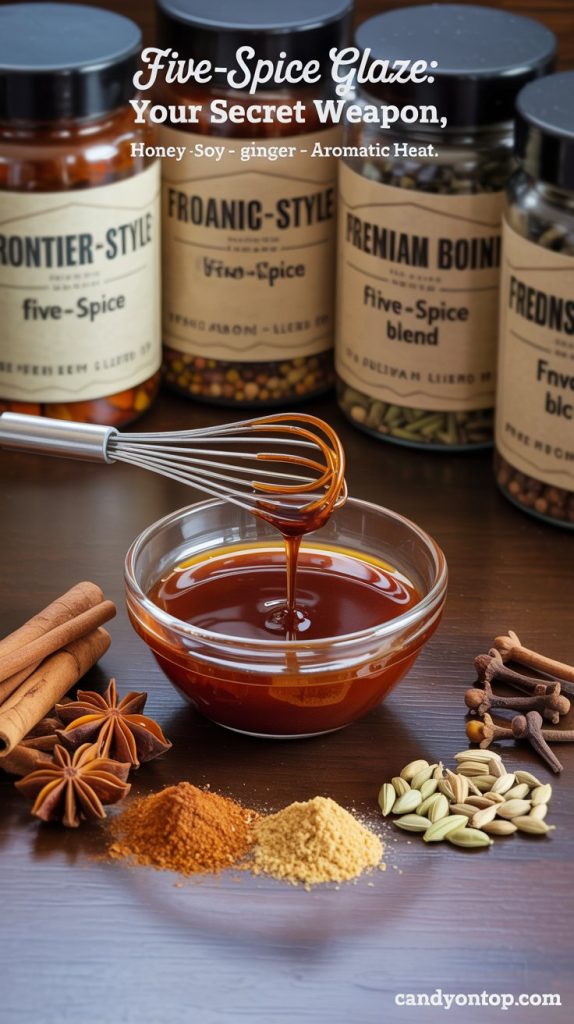
Five-spice powder is the soul of this dish. Unlike heavy, clove-dominant Western spice blends, authentic Chinese five-spice achieves a delicate balance:
-
Star Anise: Licorice warmth, floral sweetness
-
Cinnamon: Gentle heat, woodsy depth
-
Szechuan Peppercorn: Citrusy tingle, not heat
-
Fennel Seed: Subtle sweetness, slight crunch
-
Clove: Pungent anchor, used sparingly
The Best Brands: Look for Frontier Co-op, Simply Organic, or Penzeys for freshly milled potency. Avoid dusty jars from the back of your spice cabinet—five-spice fades quickly.
The Glaze Formula:

-
¼ cup honey (orange blossom for floral notes, clover for neutral sweetness)
-
2 tablespoons soy sauce or tamari
-
1 tablespoon hoisin sauce
-
1½ teaspoons five-spice powder
-
1 teaspoon finely grated fresh ginger
-
1 clove garlic, crushed to a paste
-
½ teaspoon Szechuan peppercorns, freshly ground
Whisk everything in a small saucepan over low heat until the honey loosens and the mixture is glossy. Do not boil. Set aside half for final glazing; reserve the remainder for basting.
The Method: Step-by-Step to Duck Perfection
Step 1: Prepare the Duck (Day Before)
Remove giblets and neck from cavity. Reserve for stock if you’re ambitious; discard if you’re not. Rinse duck inside and out, then pat absolutely dry with paper towels. Moisture is the enemy of crisp skin.
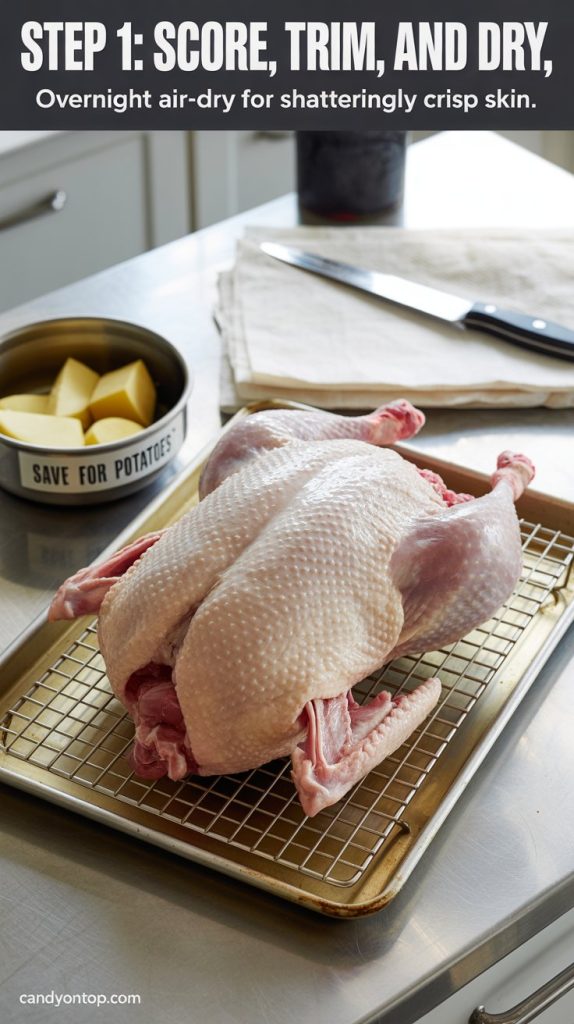
Using a sharp knife or poultry shears, trim excess fat from the cavity opening and neck flap. Save these fat scraps—they render into liquid gold for roasting potatoes later.
The Most Important Step: Using the tip of a sharp paring knife, score the duck skin in a crosshatch pattern across the entire breast and thighs. Cut through the fat layer but do not cut into the meat. You’re creating channels for fat to escape and pathways for glaze to penetrate. Space cuts about ½ inch apart.
Place duck on a wire rack set over a rimmed baking sheet. Refrigerate, uncovered, for at least 8 hours and up to 24. This air-drying step is non-negotiable for shatteringly crisp skin.
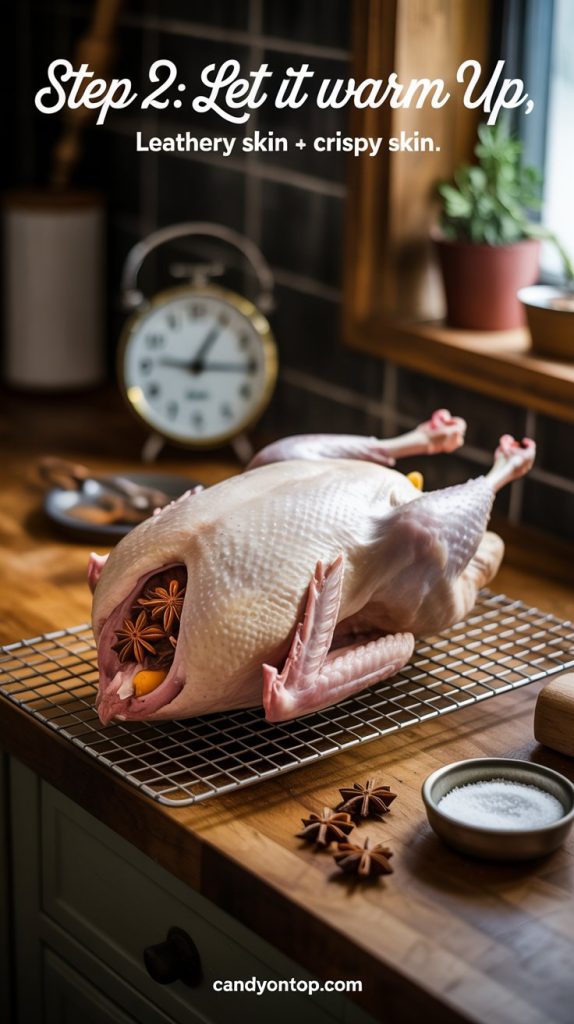
Step 2: Bring to Room Temperature
Remove duck from refrigerator 1 hour before roasting. Pat dry again—the surface should feel leathery, not tacky. Lightly season the cavity with kosher salt and a few star anise points.
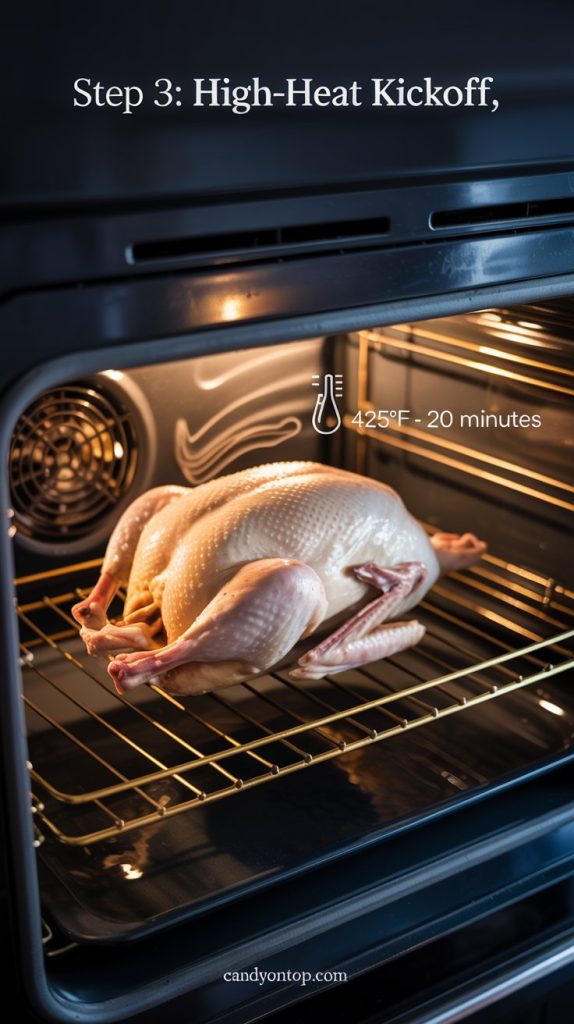
Step 3: Initial Roast (High Heat)
Preheat oven to 425°F with rack in lower third. Place duck breast-side up on a rack in a roasting pan. Pour 1 cup hot water into the pan (not over the duck)—this creates steam that prevents rendered fat from smoking.
Roast 20 minutes. The skin will begin to tighten and turn pale gold.
Step 4: Reduce Heat, Begin Basting
Reduce oven temperature to 350°F. Remove duck from oven and brush generously with the basting portion of your five-spice glaze. Return to oven.
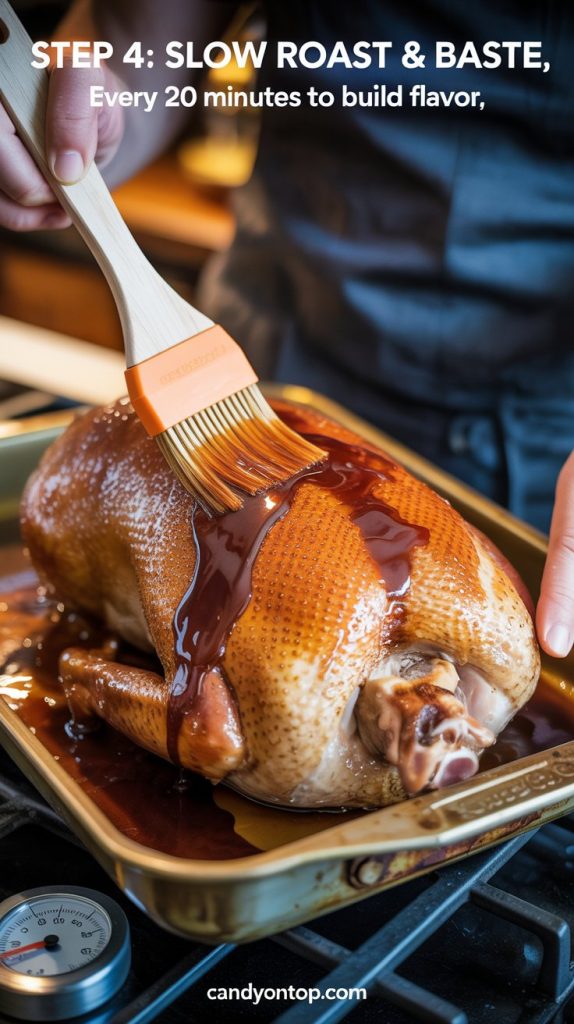
Roast 20 minutes, then baste again. Repeat this 20-minute baste cycle until a thermometer inserted into the thickest part of the thigh registers 155°F. This typically takes 60-75 minutes total at 350°F (90-100 minutes overall).
Pro Tip: If the breast skin browns too quickly, tent loosely with foil. Duck legs take longer than breasts, so the breast is your limiting factor.
Step 5: The Final Lacquer
When duck reaches 155°F, remove from oven. Increase oven temperature to 450°F. Brush duck generously with the reserved finishing glaze.
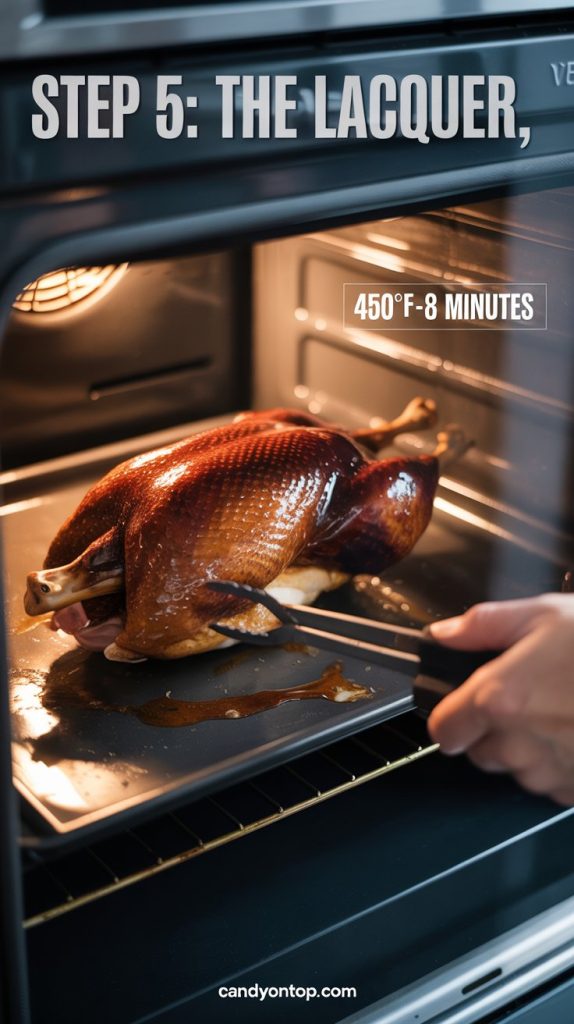
Return duck to hot oven for 5-8 minutes, watching carefully. The glaze will bubble and darken to a deep, glossy mahogany. Remove when it looks like molten glass.
Step 6: Rest (The Hardest Part)
Transfer duck to a cutting board, breast-side up. Let rest 15-20 minutes. This is not optional. The juices need time to redistribute; carving immediately releases them into a puddle on your board rather than keeping them in the meat.
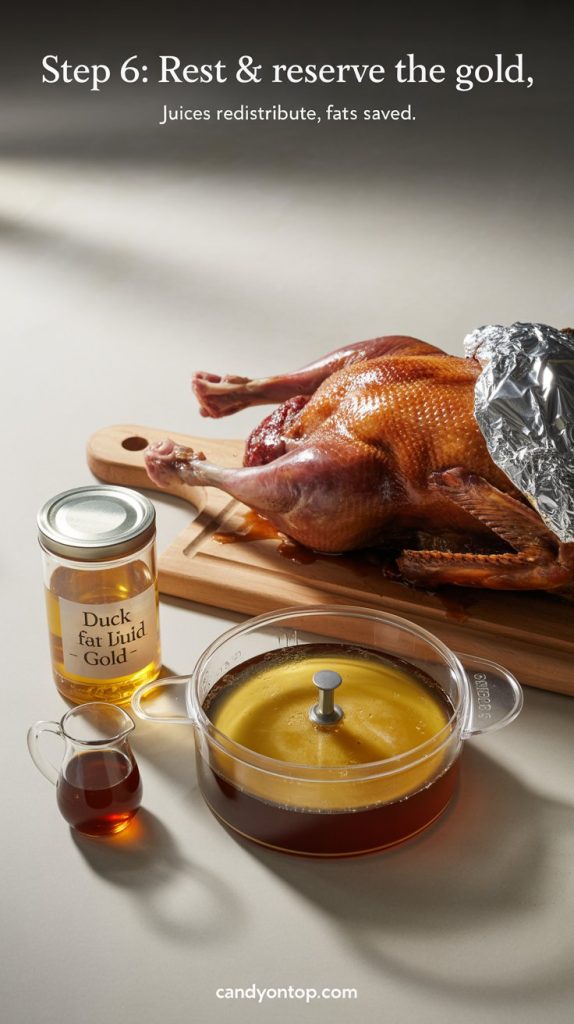
While duck rests: Pour pan drippings into a fat separator. The golden fat is liquid gold—save it for roasting potatoes or sautéing greens. The concentrated juices beneath can be whisked with a splash of sherry vinegar and orange juice for an impromptu sauce.
Step 7: Carve and Serve
Using a sharp chef’s knife or poultry shears, remove legs and thighs in one piece. Separate thigh from drumstick if desired. Cut down along one side of the breastbone, then angle your knife to follow the rib cage, releasing the entire breast half in one piece. Slice crosswise on a slight bias.
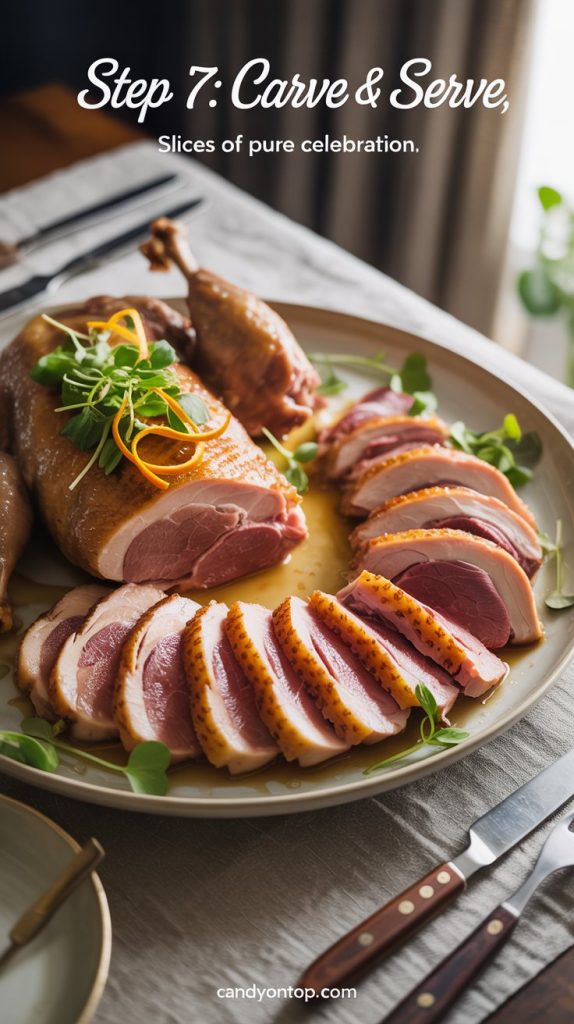
Arrange on a warm platter, drizzle with any remaining pan juices, and shower with microgreens or fresh cilantro. Serve immediately.
Five-Spice Variations for Every Palate
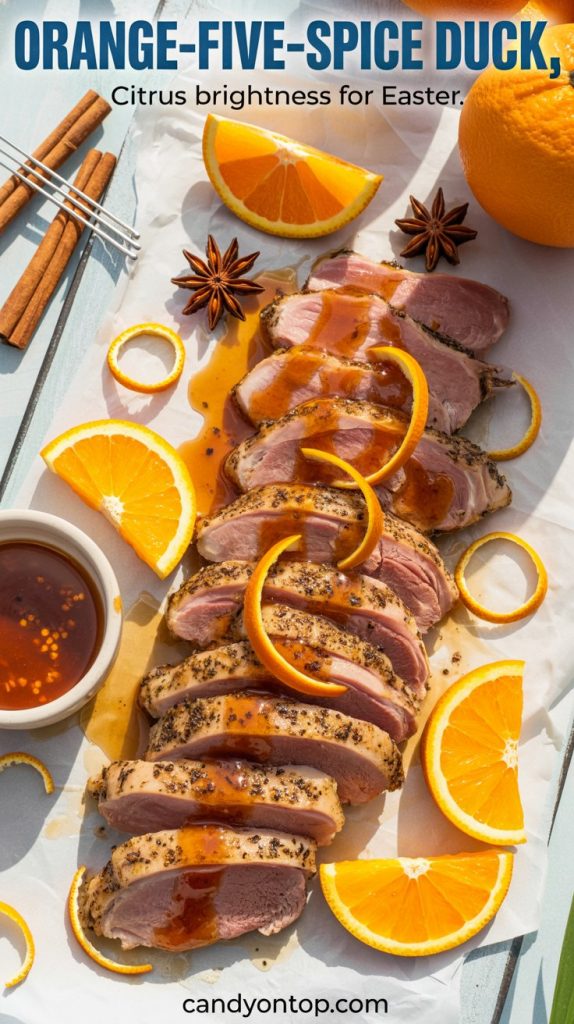
Orange-Five-Spice Duck: Add 2 tablespoons orange marmalade and 1 teaspoon orange zest to the glaze. Finish with fresh orange segments scattered over the carved duck.
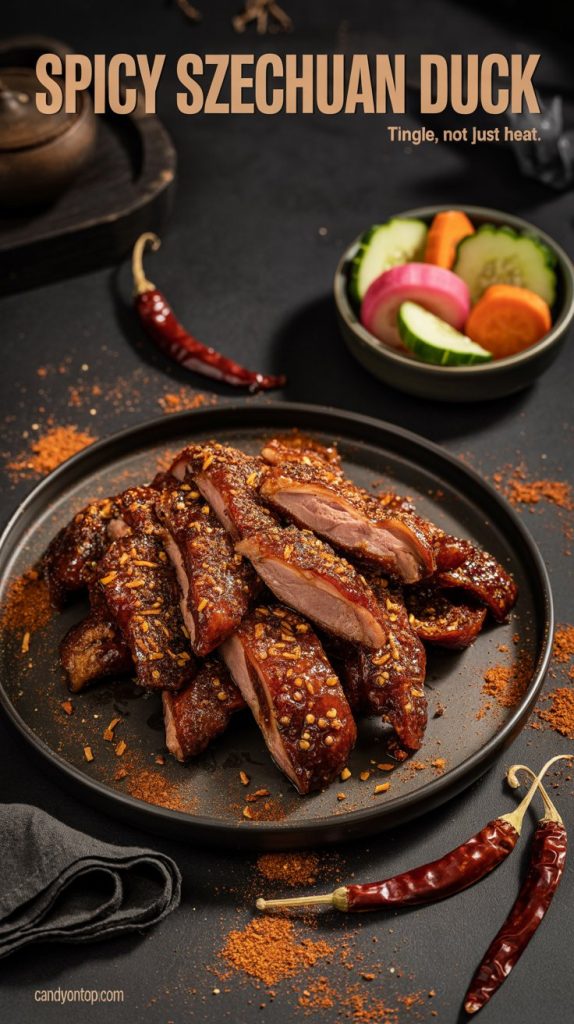
Spicy Szechuan Duck: Increase Szechuan peppercorns to 1 tablespoon, toasted and ground. Add 1 teaspoon chili crisp to the glaze. Serve with pickled vegetables to cut the heat.
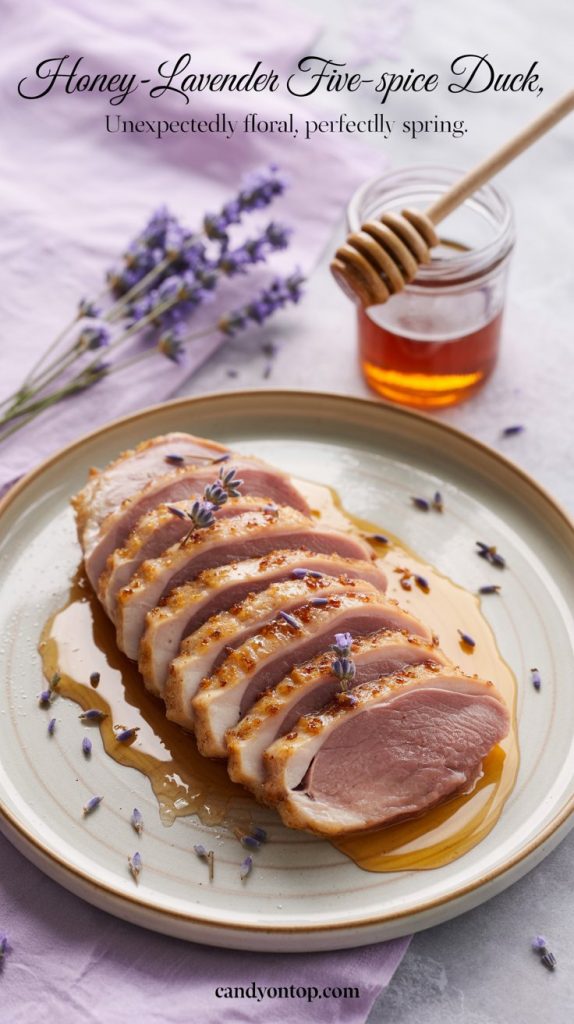
Honey-Lavender Duck: Replace half the honey with lavender honey. Add 1 teaspoon dried culinary lavender to the cavity. The floral notes are unexpectedly perfect with five-spice.
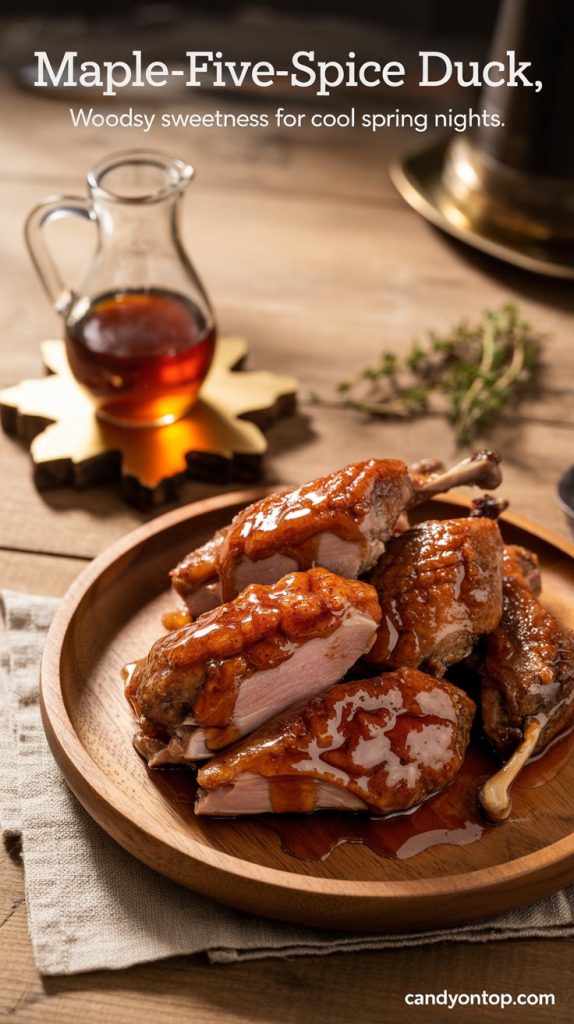
Maple-Five-Spice Duck: Substitute maple syrup for honey. The woodsy, smoky sweetness pairs beautifully with the warm spices. Ideal for East Coast Easters.
What to Serve Alongside
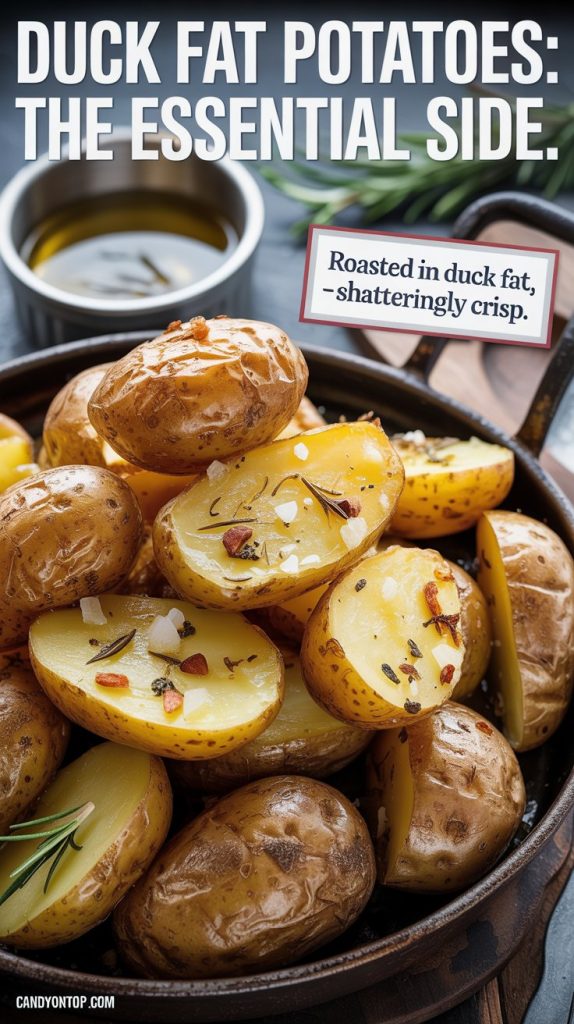
Starchy Side: Crispy duck fat roasted potatoes are the canonical pairing. Parboil Yukon Golds, rough them up with a fork, and roast in reserved duck fat at 400°F until shatteringly crisp.
Vegetable: Something bright and acidic. Try shaved fennel and blood orange salad with sherry vinaigrette, or quick-pickled carrots and daikon. Avoid creamy, heavy vegetable preparations—duck is already rich.
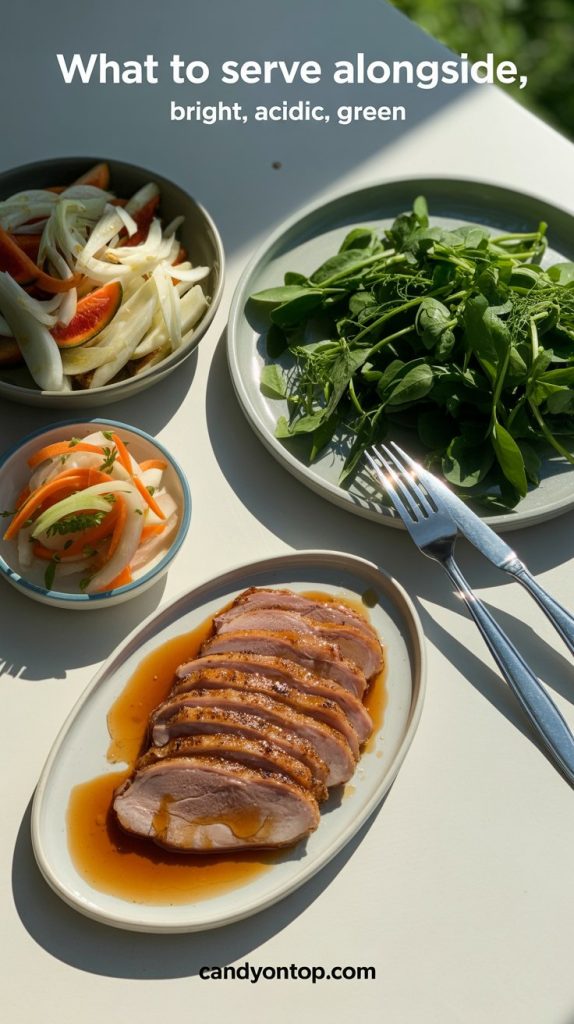
Green: Wilted pea shoots or watercress tossed with the warm pan juices. The slight bitterness cuts through the fat beautifully.
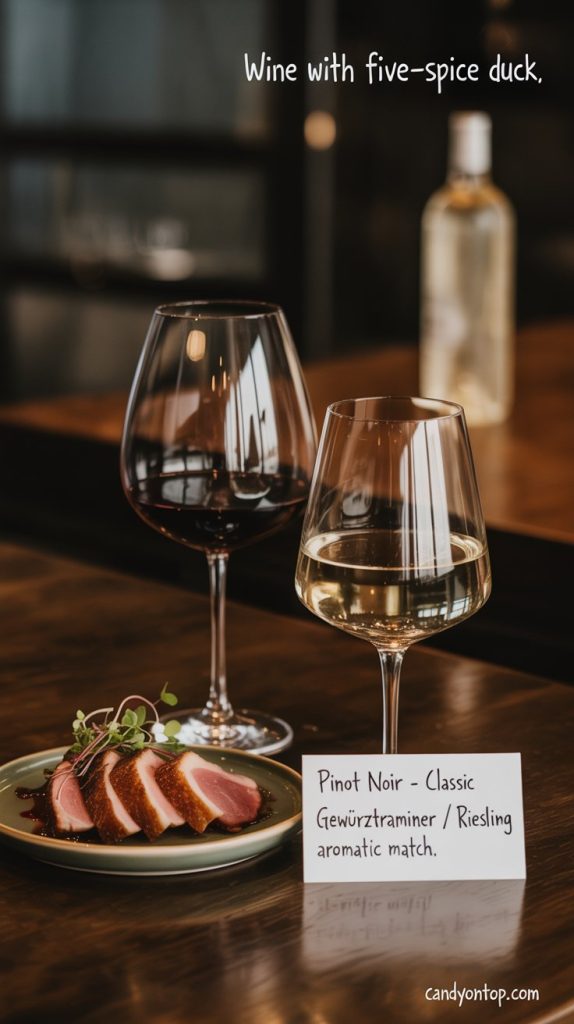
Wine: Pinot Noir is the classic duck pairing—its acidity slices through richness. For white drinkers, look for Alsatian Gewürztraminer or off-dry Riesling, which echo the five-spice’s aromatic notes.
Troubleshooting Your Duck
Skin Not Crisp? Your duck wasn’t dry enough before roasting. Next time, extend the uncovered refrigeration time to 24 hours. You can also blast the finished duck under the broiler for 60 seconds—watch it like a hawk.
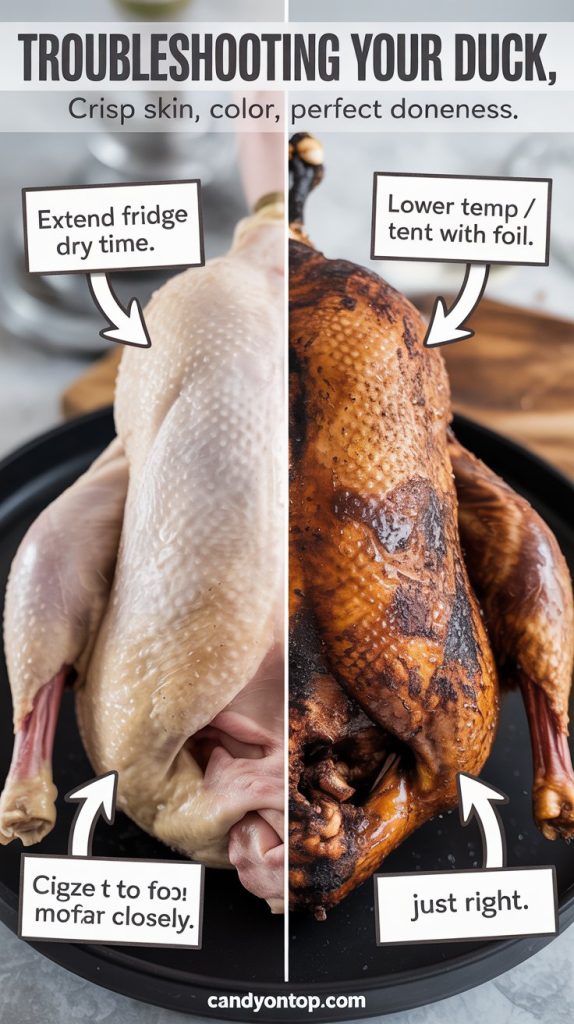
Glaze Burning? Your sugar content is caramelizing too quickly. Reduce oven temperature to 325°F during the basting phase, or tent the breast with foil while legs finish cooking.
Meat Overcooked? Duck breast should be served medium-rare to medium (135-145°F). If you prefer it more well-done, that’s fine—but stop at 155°F. Carryover cooking will add another 5 degrees during resting.
Too Much Fat in the Pan? This is not a problem. That’s flavor currency. Pour it into a jar and refrigerate. You now have the world’s best roasting medium for vegetables.
The Easter Table Argument for Duck
Here’s the truth: ham and lamb are safe choices. They’re expected. They’re what everyone serves. And there’s genuine comfort in tradition—I’m not here to cancel your honey-baked ham.

But Easter is about renewal, about breaking with the gray monotony of winter and celebrating the green, growing things of spring. Duck, with its burnished skin and deep, complex flavors, announces that the season of feasting has returned. It’s unexpected. It’s ambitious. And a little bit extra.
And this year, after everything, don’t we deserve a little bit extra?
Serve this duck, and watch your table fall silent. That’s the sound of people tasting something they’ll remember long after the basket grass is vacuumed up and the pastel eggs are forgotten.